How Nepal’s provinces have become ‘factories’ for ministers
Disloyalty does not always go unrewarded. Santosh Kumar Pandey, Lumbini Province’s minister for urban development, knows this as well as anyone. Having defied his party to keep a CPN-UML-led government afloat in the province, Pandey was appointed to his fourth ministerial portfolio on August 25. Ten days later, the Janata Samajbadi Party-Nepal expelled him.
Pandey, elected from Rupandehi-3(1), offers a more flattering explanation. “Every government should represent Madhesh and its communities,” said Pandey, who has been called ‘the evergreen minister’. “I have played a leading role in pushing for that, which is why my name keeps coming up when ministers are chosen.”
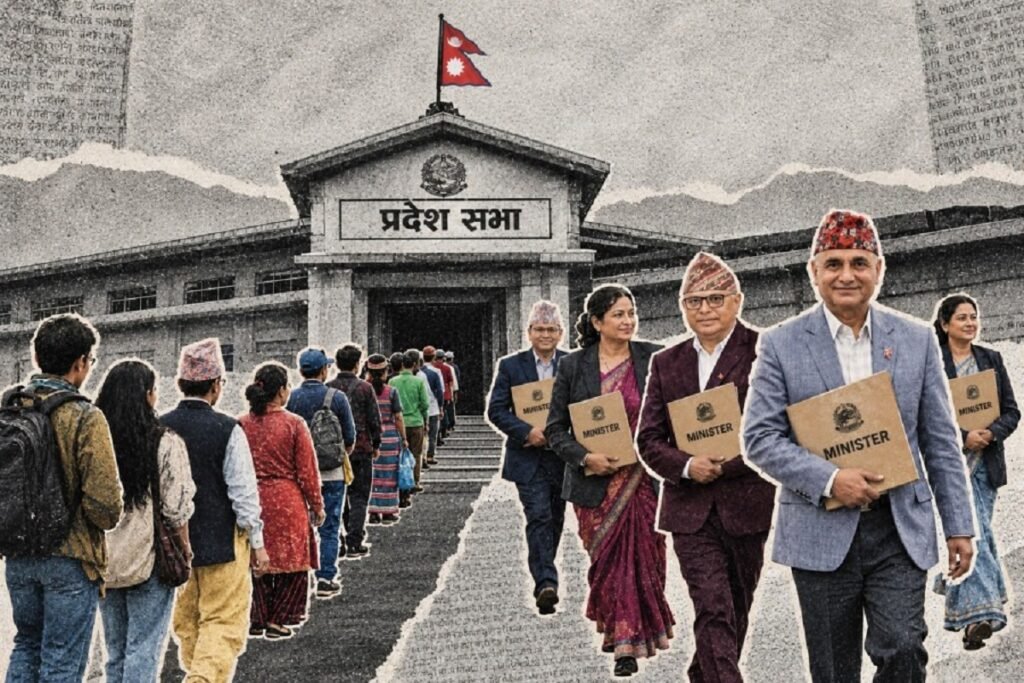
In Nepal’s provincial politics, expulsion from a party has ceased to be a sentence and become something closer to an intermission. Coalitions shift, and the banished lawmaker drifts back to the Cabinet table. Governments are enlarged, reshuffled and enlarged again, to keep alliances intact, to welcome new partners and to see that no overlooked legislator waits indefinitely for their turn.
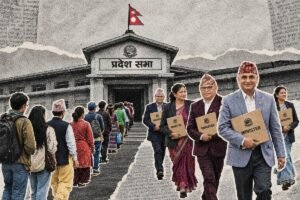
Since the provincial assemblies began their current terms in January 2023, 301 of the country’s 550 provincial lawmakers—or about 55 percent—have served as ministers or state ministers at least once. In Sudurpaschim, 41 of 53 lawmakers, more than three in four, have held ministerial offices. Of the 12 who have not, two are the speaker and deputy speaker, and one has left the assembly. In Karnali, 26 of 40 have served as ministers, while in Koshi the figure is 64 of 93. In Bagmati and Madhesh, about 45 percent of lawmakers have already had a ministerial stint. Gandaki has seen 30 of its 60 lawmakers become ministers.
The number is likely to rise further before the provincial assemblies complete their terms. With governments continuing to form and collapse, pressure to bring more lawmakers into the Cabinet is unlikely to let up.
Most provinces lack a single-party majority, so their governments are dependent on coalitions, and coalitions are held together by Cabinet seats. Those coalitions keep time with the federal capital, as tides keep time with the moon. When the balance shifts in Kathmandu, alliances in provinces rearrange themselves in its wake, and each new arrangement comes with a bill, payable in seats. New allies expect their share of ministerial posts; lawmakers who were previously left out demand their turn.
Nepal’s provinces were meant to bring the government closer to the people and to set development by local need. Increasingly, they look like places to haggle over ministerial portfolios. The costs are borne by ordinary citizens, as political horse-trading stalls budgets, disrupts public services and leaves development projects unfinished, interviews with more than a dozen officials, experts and ordinary people show. The phenomenon does not necessarily signal the failure of federalism, one expert said, but it has certainly undermined its credibility.