Bhote Koshi Flood Victims Still Await Relief as Rescue Efforts Lag
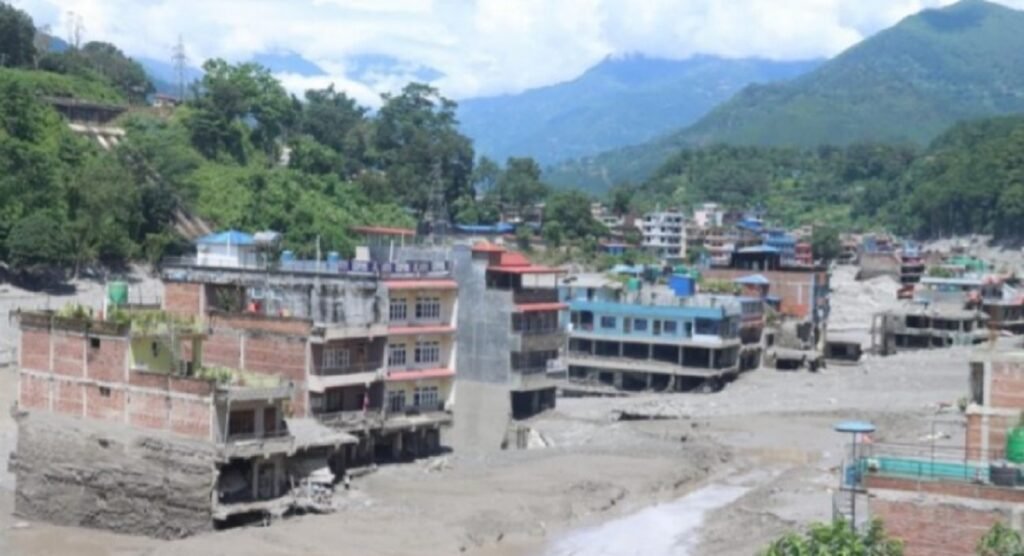
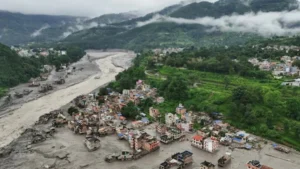
Ten days after a catastrophic glacial flood devastated the Bhote Koshi corridor, thousands of affected people are still struggling for food, clean water and medical assistance as relief supplies remain stranded because roads and bridges have been destroyed.
Local governments in the worst-hit areas of Rasuwa and Nuwakot say relief materials collected from across Nepal and abroad are stuck in warehouses, while federal authorities have centralized distribution through a single-window system. Twelve hydropower projects in the affected districts still have workers trapped inside tunnels, while several bodies swept away by the flood remain uncollected along the Bhote Koshi, Trishuli and Narayani rivers. The National Human Rights Commission (NHRC), following an inspection of affected areas, on Sept. 2 urged the federal, provincial and local governments to improve coordination and deploy skilled personnel and technology for rescue, relief and rehabilitation. It also raised concerns over delayed tunnel rescues, untraced foreign tourists, inadequate damage data and shortages of technical expertise.
At the same time, the government has sought emergency assistance from the Fund for Responding to Loss and Damage (FRLD), linking the disaster to the growing impacts of climate change. Environment Ministry Secretary Rajendra Prasad Mishra said Nepal has asked the fund’s board to hold an emergency meeting and consider special assistance because of the scale of the disaster. However, climate finance expert Raju Pandit Chhetri said there is no guarantee that funds would be released immediately, as the FRLD’s rapid-response mechanism lacks clear operational guidelines. He nevertheless described the government’s initiative as commendable.
The FRLD became operational in 2024 after its establishment was agreed at COP27 in 2022. As of June 2026, 176 project proposals from 119 countries were awaiting further evaluation, seeking a combined $2.8 billion, while only about $478.72 million was available in the fund. Meanwhile, affected communities continue to demand immediate assistance. Gosaikunda Rural Municipality officials said food items such as beaten rice, noodles and biscuits remain stranded in Nuwakot because damaged roads cannot accommodate large vehicles.
Lawmakers have urged the federal government to work closely with provincial and local authorities, arguing that local representatives are best placed to identify victims and distribute relief. The NHRC has similarly called for coordinated action among all three tiers of government and cooperation with the private sector to accelerate rescue, treatment, relief and rehabilitation.