A Silent Square: Russia Marks WWII Victory Under the Shadow of Modern Conflict
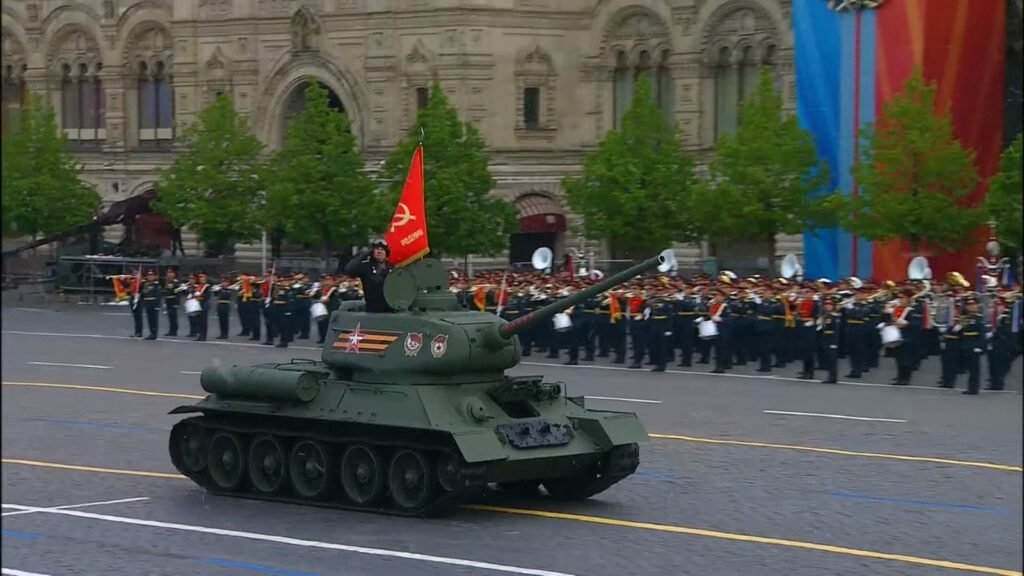
Under a heavy blanket of security and a historic absence of heavy weaponry, Russia commenced its annual Victory Day celebrations on Saturday to commemorate the 81st anniversary of Nazi Germany’s defeat. While the event traditionally serves as a grand display of the Kremlin’s military hardware, this year’s parade on Red Square was remarkably downsized, reflecting the logistical and security strains of a war now entering its fifth year. For the first time in nearly two decades, the “mobile column”—the iconic procession of modern tanks, intercontinental ballistic missiles, and armored vehicles—was entirely absent. Aside from a ceremonial flyover by combat jets, the parade was restricted to infantry formations and military bands. Kremlin officials attributed the “sudden change of format” to the current operational situation, a veiled reference to the persistent threat of Ukrainian drone strikes that have recently reached deep into Russian territory. The somber atmosphere was punctuated by a surprise diplomatic development. On Friday, United States President Donald Trump announced that Moscow and Kyiv had agreed to a three-day ceasefire, running from Saturday through Monday. The deal, which includes a massive exchange of 1,000 prisoners from each side, was hailed by Trump as a potential “beginning of the end” for the conflict. However, the truce has been characterized by deep-seated cynicism. Ukrainian President Volodymyr Zelenskyy accompanied his confirmation of the ceasefire with a mocking decree, “permitting” the parade to proceed and declaring Red Square a temporary no-strike zone. In response, Russian authorities issued a stern warning: any disruption to the festivities would be met with a “massive missile strike” on central Kyiv. Despite the geopolitical tension, President Vladimir Putin used his address to rally national sentiment, leaning on the deep emotional weight of the “Great Patriotic War.” For many Russians, the holiday remains a rare point of consensus in a divisive era, honoring the 27 million Soviet lives lost between 1941 and 1945. Yet, as the sun rose over a tank-less Red Square, the spectacle served as a stark reminder of how the ongoing war has reshaped the very traditions meant to project Russian invincibility.