Nepali families paid millions to send their sons to US. They ended up in jail
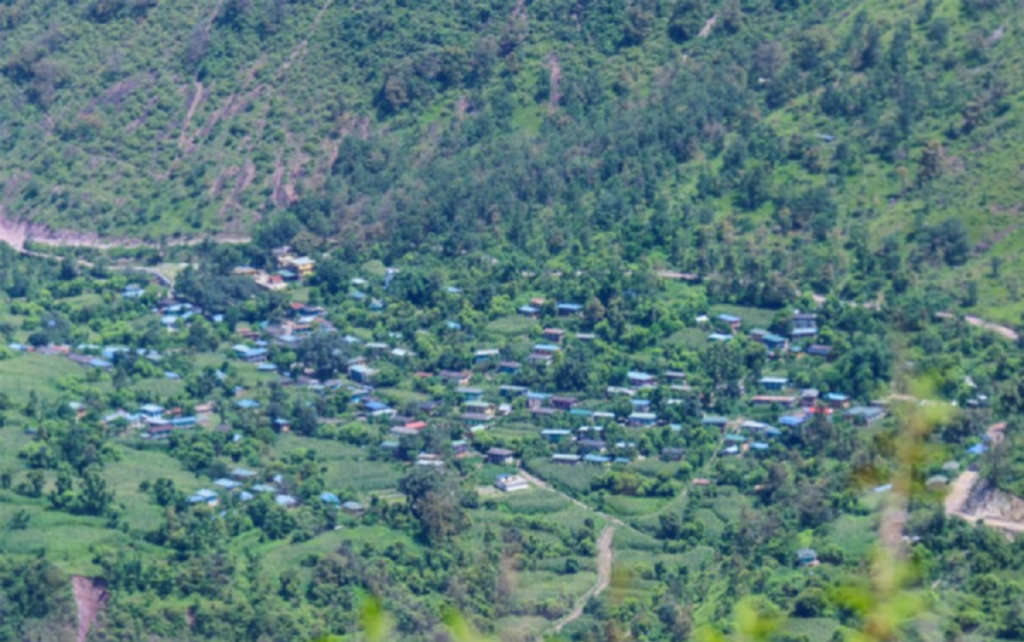
Rain falls steadily outside the small mud house in Rukum East, cooling the air and casting a subdued mood over the village. Water drips from the roof. From the kitchen, a thin trail of smoke rises into the rainy sky.
Inside, a middle-aged couple sits close to the fire.
“Namaste. How are you?”
It is an ordinary exchange, the kind that begins countless conversations in rural Nepal. But before long, the talk turns to their son, the journey that took him halfway around the world and the debt that journey has left behind.
The father nudges a log deeper into the fire. Sparks flicker. He speaks slowly, sometimes looking into the flames, sometimes at his wife. At times, neither says anything.
There is a lot in that silence.
Outside, the rain keeps falling. Inside, the fire throws a faint light across the room as the couple recounts what happened to their son. Smoke stings their eyes, but they remain warm and welcoming.“Where is your son?”
“America.”
“America?”
“Yes. He’s in jail there.”
“In jail? What happened?”
“Bad luck,” the father says. “We spent nearly Rs10 million, and our son ended up in jail.”
Sabin (not his real name), from ward 3 of Sisne Rural Municipality in Rukum East, has spent the past 19 months in a US jail.
This is how the conversation with his parents begins.
The couple does not want their names, or their son’s, published.
“If everything we tell you comes out in the news, they say it could cause more trouble for our son,” his father says.
As the couple talks, a story emerges of a young man who left Nepal in search of work, a journey that took him through several countries, and a family that borrowed millions of rupees to make it happen. Their son reached the United States. But instead of the new life they had imagined, he ended up behind bars.
xxxxx
Sabin had just turned 18 when he left Nepal for the United States.
An agent told his father that a young man that age could not travel alone and that he would have to accompany his son as far as Dubai. The two flew from Kathmandu to Dubai on visit visas. There, the father handed his son over to the agent and returned home.
Sabin remained in Dubai for 14 months, his father says. The family kept pressing the agent to move things forward, and eventually the journey resumed.
“After that, he was taken through Brazil and several other countries. It took another four months,” his father says. “Then, on January 6, 2025, we got the news that he had reached America.”
Soon after arriving, Sabin called his father.
“Dad, I’ve reached America. The police have arrested me here. They might put me in jail. Don’t worry. I’ll call you myself soon.”
Nearly three months passed before he called again.
“I’m in jail.”
Sabin is among a growing number of young Nepalis who have risked long and dangerous journeys to the United States after being promised work and a better life.
Many are taken through irregular routes spanning several countries, often after their families pay agents enormous sums of money. The journeys can take months and expose migrants to considerable risks.
Sabin made it to the United States. He was arrested soon after arriving and placed in jail.
At first, his parents took some comfort from knowing that he had reached his destination. They had spent months worrying about the journey. Now, at least, their son was in America.
But that relief did not last.
His detention and the uncertainty surrounding his legal case have left his family struggling with two burdens at once: worrying about their son and repaying the enormous debt they incurred to send him there.
The promise sold by the agents and the reality that followed have pushed the family into a crisis.
Sabin’s story is one example of how the dream of reaching the United States can turn into years of uncertainty, detention and debt.
xxxxx
Sabin had recently passed Grade 12 when he decided to leave Nepal. His Dubai visa arrived before he had even received his school certificate.
He had hoped to earn well in the United States and help his family overcome its financial difficulties.
Instead, the son who left home looking for work is now in a US jail, while his parents struggle to repay the money they borrowed to get him there.
His mother sits by the fire, cooking as she speaks.
“It feels as though we paid money to send our son to jail,” she says. “And he’s in a place where we can’t see him or meet him. He was studying. We were poor, but he wasn’t under any pressure. There was no need for him to get caught up in this America business.”
She pauses.
“Now we worry about our son on one side and deal with the people we owe money to on the other.”
The agent alone charged the family Rs8.5 million to get Sabin to the United States, his father says.