Credit picks up, but Nepal’s banks are awash with cash
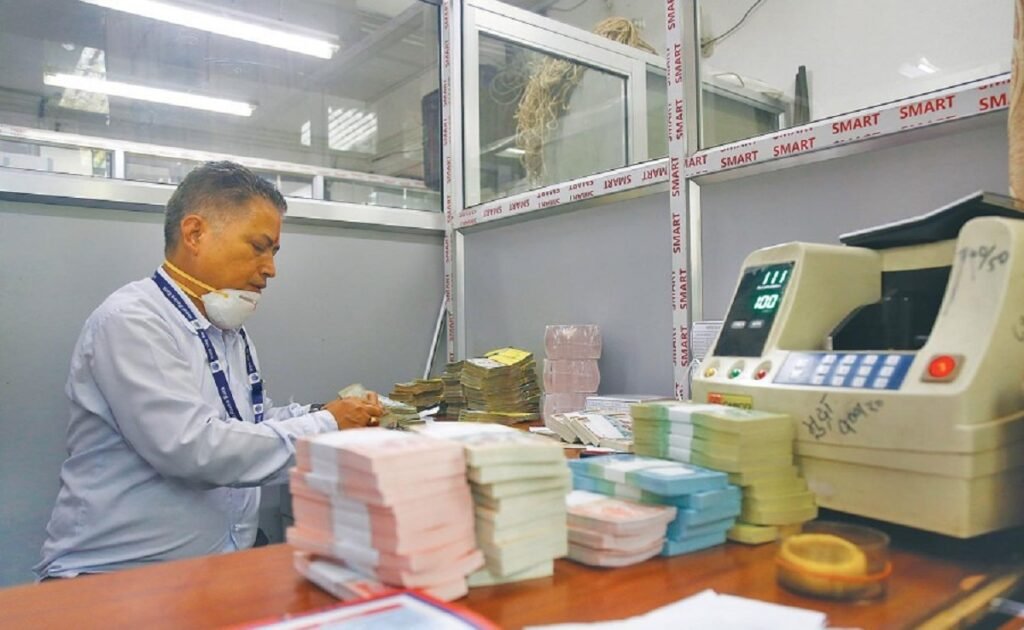
Credit disbursement by banks and financial institutions picked up sharply in the first quarter of the current fiscal year, but Nepal’s banking system continues to sit on a massive surplus of loanable funds, reflecting weak credit absorption despite strong deposit growth.
Nepal Rastra Bank data show that banks and financial institutions extended an additional Rs133 billion in credit between July 17 and October 11, more than four times the Rs30 billion increase recorded during the same period last fiscal year.
However, bankers and financial analysts caution that the surge does not necessarily signal a broad-based economic recovery. Much of the increase appears to be driven by higher import costs, a stronger US dollar, and seasonal borrowing ahead of major festivals, rather than a significant expansion in industrial production and investment.
The country’s import figures offer some support for this assessment, as businesses need more money to finance imports when the prices of goods rise and the rupee depreciates.
The latest credit expansion is the highest recorded for the first quarter over the past five fiscal years, according to data compiled by Kantipur. Banks’ additional lending stood at Rs15 billion in the first quarter of fiscal year 2022-23, before rising to Rs73 billion in 2023-24 and Rs107 billion in 2024-25.
Credit growth in the first quarter of the last fiscal year was exceptionally weak, as economic activity was severely disrupted by the September Gen Z protests, which left 76 people dead and caused property damage worth around Rs84.45 billion.
This year’s increase, therefore, comes against a particularly low base. While lending has gained momentum, the extent to which the improvement reflects stronger underlying economic activity remains uncertain.
Nepali bankers say credit demand has increased across several sectors, including import financing, small and medium enterprises, hydropower, share-backed lending, real estate, and manufacturing. However, trade financing remains a major contributor to the expansion.
“The opening of letters of credit (LC) for imports have gathered momentum in recent months,” said Santosh Koirala, president of the Nepal Bankers’ Association.
“A major portion of the expanded credit is tied to trade financing. However, we are also observing increased credit demand across small and medium enterprises (SMEs), hydropower projects, margin lending against shares, real estate, and manufacturing sectors.”
A chief financial officer of a commercial bank, who requested anonymity, said letters of credit issued by commercial banks had increased by an average of 20 percent between mid-June and October 14.
“There has been visible improvement in vehicle, real estate, hydropower, and gold-collateralised loans,” the official said.
Nabil, Global IME, Kumari, Everest, and Laxmi Sunrise were among the banks that disbursed higher volumes of credit.
Rajesh Kumar Agrawal, former president of the Confederation of Nepalese Industries, said industrial credit demand had not increased significantly during the first two months of the current fiscal year, although borrowing had improved in other areas.
“The report by the National Statistics Office, the country’s statistical agency, itself highlights that the condition of the industrial sector has further deteriorated,” he said. “In the banking and financial sector, however, loan demand appears to have picked up in areas such as real estate, vehicles, and share lending.”
Financial analysts and senior bankers say the headline credit growth figures should be treated cautiously until stronger lending translates into sustained investment, production, and economic activity.
Parashuram Kunwar Chhetri, a former banker and financial sector analyst, identified two major factors behind the increase in credit: rising prices in domestic and international markets and the appreciation of the US dollar.
“Because of rising prices and a stronger dollar, traders are required to secure higher credit amounts simply to import the same volume of goods as before,” he said. “This increase in costs inflates credit figures without necessarily indicating an expansion in real economic output.”