All three major Nepal-China crossings hit by monsoon disruptions ahead of Dashain
All three major land crossings between Nepal and China have been disrupted just weeks before Dashain, the country’s biggest Hindu festival, affecting trade and cross-border movement at a time when demand typically rises.
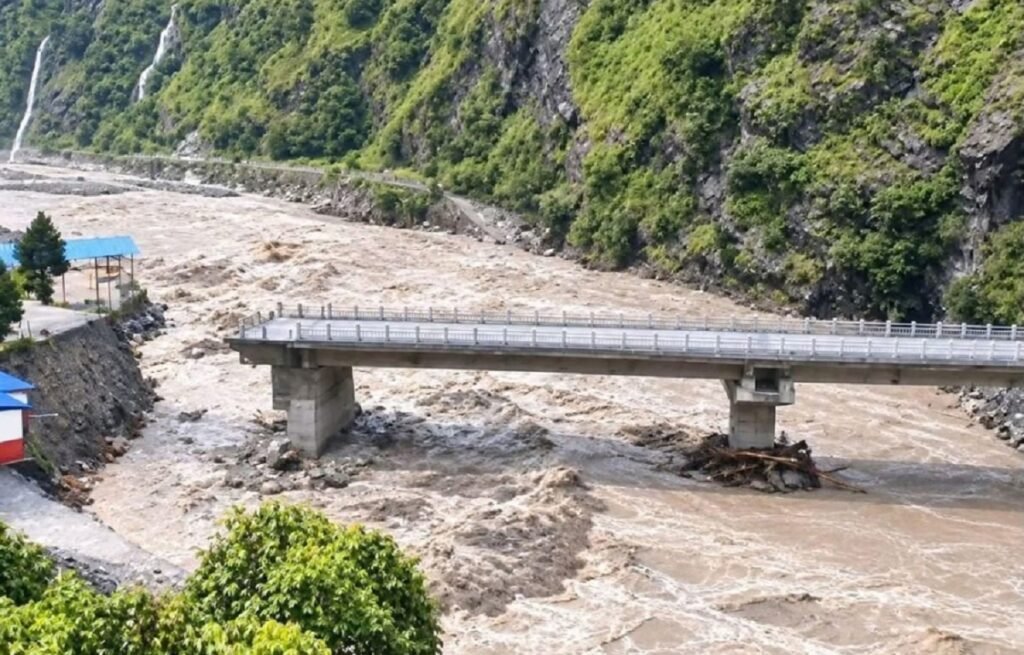
The Korala crossing in Mustang, the latest to be affected, has been cut off after three days of heavy rain triggered flooding, landslides and road erosion along the Beni-Jomsom section of the Kali Gandaki corridor. The Rasuwagadhi-Kerung crossing in Rasuwa has remained closed since the devastating flood of August 26, while China has kept the Tatopani crossing in Sindhupalchok closed on its side for about a month.
The simultaneous disruption of all three crossings has affected Nepal’s overland trade with China and the movement of goods across the northern border.
Heavy rain has caused extensive damage along the Kali Gandaki corridor. Kul Prasad Acharya, assistant chief district officer of Mustang, said more than 50 landslides, large and small, had occurred along the Maldhunga-Beni-Jomsom road in Parbat.
The Kali Gandaki river has also eroded the road at several locations. Sunday’s flooding washed away a section of road leading to the bridge across the river at Pokharebagar in Annapurna Rural Municipality, leaving northern Myagdi and the entire Mustang district cut off by road after a large gap opened between the road and the bridge.
“People could not even travel between settlements within their own local units because of the floods and landslides,” Acharya said. “Power has also been out for three days, making it difficult to receive information on time. The damage is much greater than we had expected.”
The District Administration Office, Myagdi, had restricted vehicular movement from 6pm to 6am between September 24 and 27 citing the weather and road conditions.
The disruption of the northern crossings has also hit automobile imports, according to Surendra Kumar Upreti, president of the NADA Automobiles Association of Nepal.
“We are already unable to deliver vehicles to customers who booked them for Dashain,” Upreti said. “There is a risk that customers hoping to buy new vehicles for Dashain and Tihar will not be able to get them. Between 35 and 45 percent of annual vehicle sales take place during the festive season, so government revenue will also be affected by the disruption.”
Importing vehicles through Korala adds between Rs50,000 and Rs100,000 to traders’ costs per vehicle, Upreti said. He added that businesses had so far absorbed the additional transport costs rather than passing them on to customers.
China accounts for about 14 percent of Nepal’s total foreign trade. It supplies around 17 percent of Nepal’s imports but accounts for only about 0.5 percent of its exports.
In the first two months of the current fiscal year, from July 17 to September 17, Nepal imported goods worth Rs76.4 billion from China while exports amounted to just Rs293.3 million. In the previous fiscal year, imports from China totalled Rs425.24 billion, compared with exports worth Rs1.8925 billion.
Nepal imports mainly vehicles, mobile phones, computers, chemical fertilisers, ceramic products and cosmetics from China. Its exports include incense, handicrafts, pashmina and readymade garments.