Nepal Seeks Climate Finance After Devastating Bhotekoshi Floods
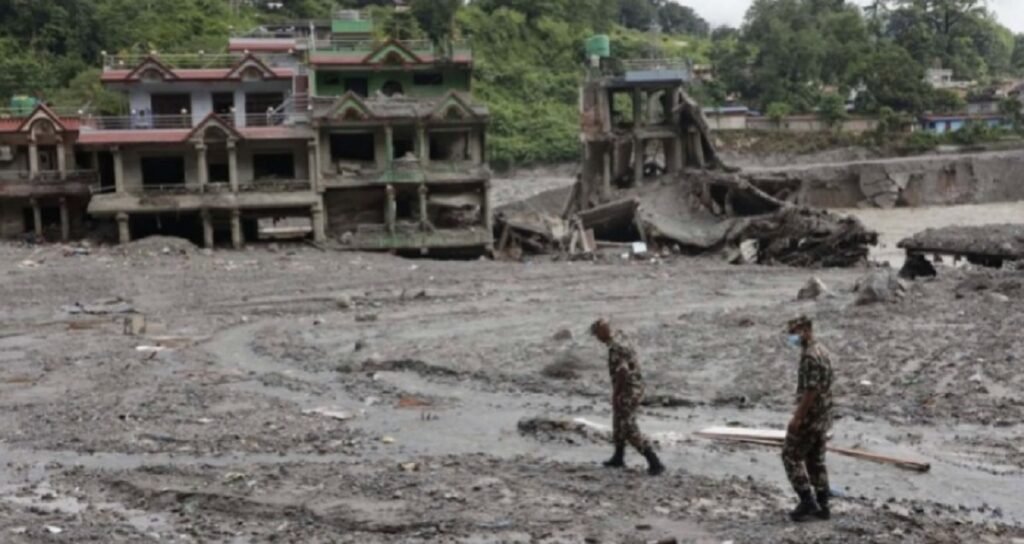
The devastating Bhotekoshi floods of August 26, which caused an estimated Rs386.16 billion in losses, have renewed Nepal’s call for international climate finance and greater support for vulnerable Himalayan countries.
The disaster has intensified debate over the link between climate change and increasingly severe mountain disasters, as well as Nepal’s efforts to secure funding for loss and damage.
Prime Minister Balendra Shah said climate change was a global problem and called for shared international responsibility to address its impacts. The government has argued that Nepal contributes little to global greenhouse gas emissions but faces disproportionate climate risks.
Finance Minister Swarnim Wagle and Environment Minister Geeta Chaudhary have jointly sought urgent support from the Loss and Damage Fund, following an assessment by the National Disaster Risk Reduction and Management Authority. The assessment estimates that Rs7.96 billion is needed for early recovery within six months.
However, experts have cautioned that securing funding will require strong scientific evidence, detailed assessments and proper documentation. Former UN representative Madhu Raman Acharya questioned whether Nepal had submitted sufficient supporting material with its request.
Climate-finance experts also stressed that the Loss and Damage Fund is not simply a compensation mechanism. Raju Pandit Chhetri urged Nepal to seek grants rather than loans to avoid increasing its debt burden. He estimated that Nepal could potentially receive up to around $20 million from the fund.
Nepal has also sought to clarify that it is not demanding compensation from specific countries such as India, China or the United States. Foreign Minister Shisir Khanal said Nepal would instead pursue support through international mechanisms under the UN climate framework and the Paris Agreement.
Experts say the Bhotekoshi disaster provides Nepal with an opportunity to strengthen its long-term climate strategy by investing in early-warning systems, hazard mapping, river and glacier monitoring, disaster modelling and scientific research.
Prime Minister Shah is expected to raise the Bhotekoshi disaster, Himalayan climate risks and Nepal’s reconstruction needs at the upcoming UN General Assembly.