PM Modi Unveils NPR 240-Billion Reconstruction Package During Balendra Shah’s Visit
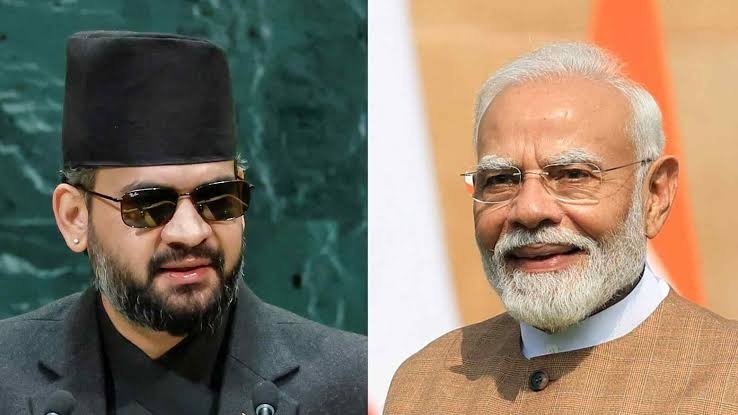
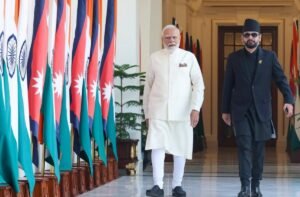
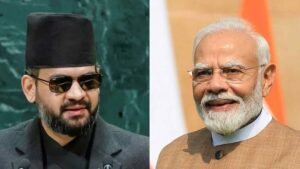
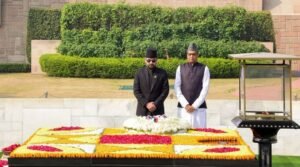
India has announced a massive economic and development cooperation package worth 240 billion Nepalese rupees ($1.62 billion) to support Nepal’s post-disaster reconstruction and long-term economic growth, following wide-ranging bilateral talks in New Delhi on Monday between Prime Minister Narendra Modi and visiting Nepali Prime Minister Balendra Shah. Arriving on Sunday with a 34-member high-level delegation that included Finance Minister Swarnim Wagle and Foreign Minister Shisir Khanal, Shah received a ceremonial welcome at Rashtrapati Bhavan and paid tribute at Rajghat during his first foreign bilateral visit since assuming office in March, undertaken in the wake of devastating August floods that left 1,500 people dead, 5,200 missing, and an estimated $4.78 billion reconstruction bill—far exceeding the $20 million allocated by the United Nations loss and damage fund. Addressing the press alongside Shah, Prime Minister Modi emphasized that the NPR 24,000-crore package will inject fresh momentum into Nepal’s recovery, while both leaders jointly flagged off the weekly Saryu-Kamala Express connecting Ayodhya Cantt with Janakpur Dham to strengthen cultural and cross-border rail connectivity. The two prime ministers also inaugurated several landmark infrastructure and energy assets, including the Dharchula road bridge linking Uttarakhand with Nepal, a 669 MW hydropower plant, and Phase II of the Motihari-Amlekhgunj petroleum pipeline, while laying the foundation stone for the Jhapa petroleum terminal. Underscoring the breadth of their strategic partnership, New Delhi and Kathmandu unveiled a Joint Vision Document anchored on the theme of “Viksit Bharat – Samriddha Nepal” and signed eight Memorandums of Understanding spanning satellite communications between ISRO and Nepal’s Ministry of Information, policing and forensic sciences involving the National Forensic Sciences University and Rashtriya Raksha University, civil-service training, healthcare, Ayurveda, sustainable urban development, and livestock and fisheries. Expanding educational and people-to-people ties further, Modi announced increased scholarships for Nepali students in law and technology alongside plans to establish an offshore campus of the Indian Institute of Technology (IIT) in Nepal. Describing bilateral relations as “as strong as the Himalayas,” Prime Minister Shah welcomed Indian investors to participate in Nepal’s development journey and called for deeper educational exchanges and enhanced air connectivity, cementing a comprehensive new chapter in India-Nepal cooperation across physical infrastructure, clean energy, disaster resilience, and human capital development.