Nepal turns to insurance as human-wildlife conflict and losses grow
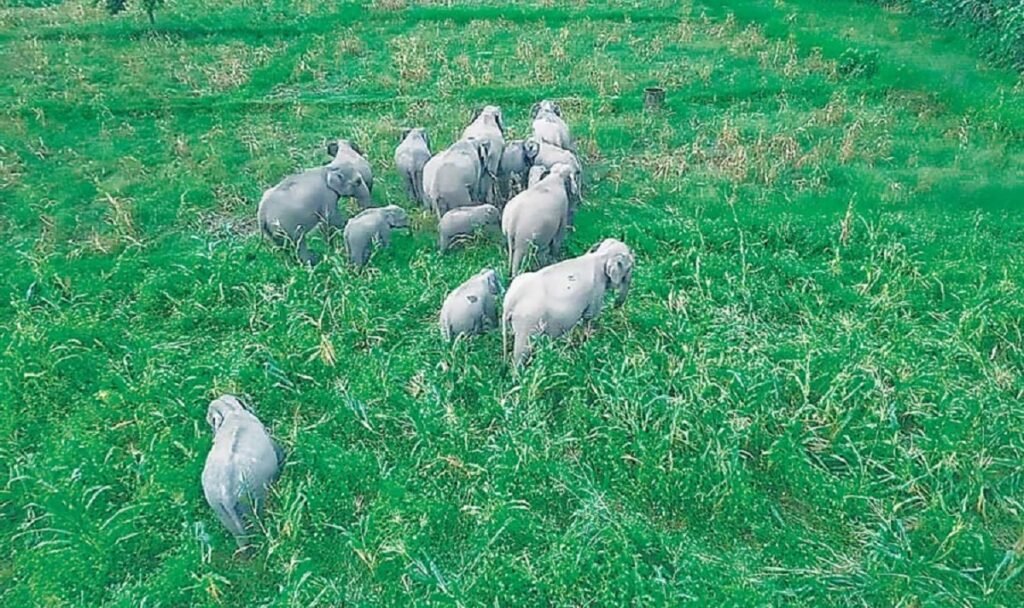
As human-wildlife conflict intensifies across Nepal’s forest fringes, a new insurance policy aims to help families recover from deaths, injuries, and devastating economic losses.When Dhurbe, the notorious elephant, emerged from the forest in Jagatpur last month, few villagers could have predicted who would cross his path next.
The adult male tusker charged into a settlement bordering Chitwan National Park and killed Ashika Bote and her young son, adding two more names to a grim record that stretches back more than a decade. According to wildlife officials, Dhurbe has been responsible for 25 human deaths since 2010, and is one of Nepal’s deadliest wild animals. For Ashika’s family, the loss reopened an old wound: Dhurbe had already claimed the lives of two relatives in Madi in 2012.
Their deaths have renewed attention to a growing crisis across Nepal’s forest fringes. As wildlife populations recover and human settlements continue to expand along the edges of protected areas, encounters between people and wild animals are becoming more frequent— and often deadly.
The Department of National Parks and Wildlife Conservation recorded more than 9,900 cases of wildlife attacks on people in its 2024-25 annual report. Nineteen people were killed, 53 suffered serious injuries, and another 50 sustained minor injuries. Chitwan National Park, Nepal’s flagship conservation area, has recorded more than 120 human deaths from wildlife attacks over the past decade.
In Bardiya district, wildlife killed 11 people between mid-July last year and June this year, nearly doubling the previous year’s death toll. Leopards accounted for eight of those deaths, while tigers killed two people and an elephant killed another. Fifteen others were injured during the same period, after which a joint team from the Division Forest Office, Bardiya National Park, and the National Trust for Nature Conservation captured six leopards identified as posing repeated threats to nearby communities. Even so, residents in municipalities including Gulariya, Rajapur, Madhuwan, and Bardiya continue to report leopard incursions into settlements.
Across Nepal, wild animals have killed 146 people over the past five years. Another 399 people suffered serious injuries and 251 sustained minor injuries. Elephants, rhinos, tigers, leopards, bears, wild dogs, and crocodiles have also destroyed homes, livestock sheds, standing crops, and caused heavy financial losses on households that depend on farming for their livelihoods. During the same period, the government spent nearly Rs586 million compensating victims of wildlife-related incidents.
For decades, Nepal’s primary response has been to compensate victims after attacks occur. Families could apply for government relief for deaths, injuries, damaged houses, livestock losses, and destroyed crops, but the process depended on official verification and government disbursement.
Last month, Nepal introduced a different approach.
Beginning July 17, non-life insurance companies licensed by the Nepal Insurance Authority began offering the country’s first Wildlife Risk Insurance Policy. Developed in response to requests from provincial and local governments, conservation authorities and communities living in wildlife-prone areas, the scheme is intended to complement the existing government relief system rather than replace it.
For an annual premium of Rs1,500, households can purchase protection against death, injury, and property losses caused by attacks by 18 species of wild animals, including elephants, tigers, rhinoceroses, leopards, bears, and crocodiles. Coverage includes up to Rs1 million for accidental death or permanent disability, Rs 500,000 for temporary disability, Rs 100,000 for treatment of serious injuries, and Rs 20,000 for minor injuries. The policy also insures houses, livestock, and agricultural crops, while providing Rs50,000 within seven days to help families cover funeral expenses after a fatal attack.
The policy marks Nepal’s first attempt to manage wildlife risk through insurance. Officials hope it will provide households with faster financial support after attacks while easing pressure on government compensation programmes. Whether it succeeds will depend not only on how widely communities adopt it, but also on whether it can reduce the economic insecurity that often follows living alongside wildlife.
Binod Kumar Pokharel, deputy director at the Nepal Insurance Authority, said the scheme was designed as a pilot and could be refined as insurers begin issuing policies and processing claims.
“This wildlife policy has been formulated on the request of provincial and local governments, especially Koshi Province, Mechi Municipality, and the Department of National Parks,” Pokharel said.
Because Nepal had no previous wildlife insurance programme to use as a model, the insurance authority looked to existing insurance products when determining the Rs1,500 premium, he said. The coverage limits were also designed to ensure victims would receive at least as much support as they currently receive through government relief programmes.
“NIA has taken this product as a pilot product for this year and will revise it accordingly in the following year,” he said. “The major expectation is that this policy will reduce the financial and administrative burden of the government in the days to come.”