
National Public Debt Reaches New High of Rs 2.975 Trillion
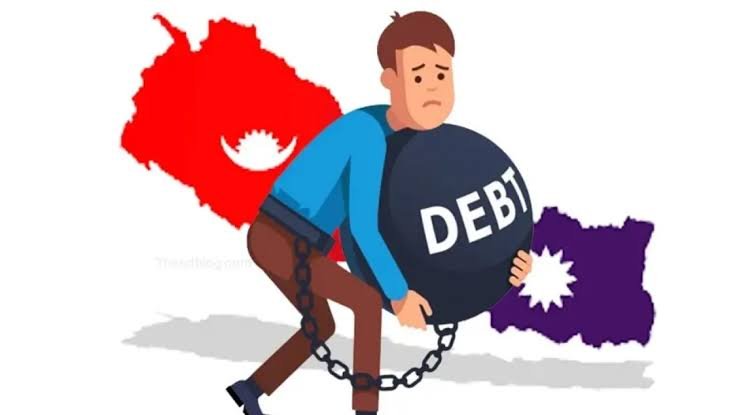
Every citizen of Nepal—regardless of age, occupation, or place of residence (whether in a village or a city)—carries an average share of approximately 100,000 rupees of the national public debt. Even if you have never taken out a bank loan yourself, or if the government has never issued a bond in your name, the total public debt of the country, when distributed across the entire population, places this financial burden on every individual.
This is not a personal loan, nor is the government going to send a bill for 100,000 rupees to every citizen. However, the primary source for repaying the principal and interest on government debt is, ultimately, the revenue collected from its citizens. The funds the government gathers through taxes, fees, and other income streams are used to service this debt. If revenue falls short, the situation may necessitate further borrowing. Consequently, the burden of debt incurred today is passed on to future generations.
The country’s public debt has reached approximately 3 trillion rupees. According to a report by the Public Debt Management Office, the total public debt burden on the government stood at 2.975 trillion rupees as of November 16 of this year—equivalent to 45.08 percent of the Gross Domestic Product (GDP). Of this total, 52.93 percent consists of external (foreign) debt, while 47.07 percent is domestic debt.
Based on population projections from the National Statistics Office, Nepal’s population is expected to exceed 30 million (3 crore) by 2026. If the total public debt is divided by this population, it amounts to approximately 98,930 rupees per person. In other words, on average, every Nepali citizen carries a public debt burden of roughly 100,000 rupees. If a family of five members is taken as the basis, then that family bears a public debt burden of approximately 4,95,000 rupees.