Home Minister Steps Down in Nepal While Kathmandu Presses Territorial Claims and Seeks Indian Reconstruction Funds
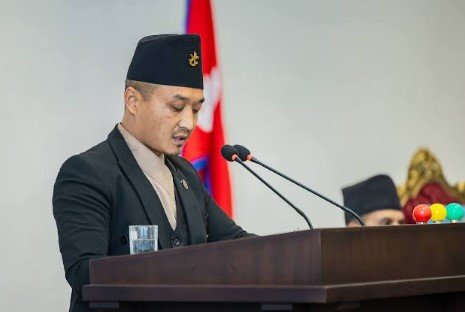
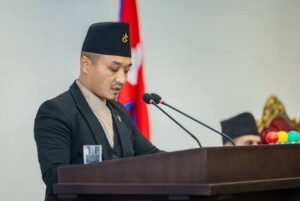
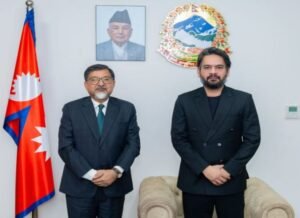
Nepal is navigating a turbulent week marked by domestic political upheaval, renewed border friction with New Delhi, and high-stakes economic diplomacy ahead of Prime Minister Balendra Shah’s upcoming visit to India. On Wednesday, Home Minister Sudan Gurung tendered his resignation, marking the second high-profile cabinet departure within a single month. The 38-year-old former Gen-Z protest leader stated that emerging questions surrounding his personal investments should undergo thorough investigation, prompting Prime Minister Shah to assume direct charge of the Home Affairs portfolio. Gurung’s exit follows the earlier dismissal of Labour Minister Deepak Kumar Sah over allegations of misconduct, underscoring mounting governance pressures on the administration. Simultaneously, diplomatic tensions flared between Kathmandu and New Delhi after Nepal lodged a formal protest on Sunday objecting to an agreement between India and China to resume the Kailash Manasarovar pilgrimage route through the Lipulekh Pass. Reasserting its territorial claims, Kathmandu maintained that Limpiadhura, Lipulekh, and Kalapani constitute integral parts of Nepali territory. India swiftly rejected the objection, responding that the Lipulekh corridor has been continuously utilized by Indian pilgrims for the sacred journey since 1954. Despite this diplomatic spat over the disputed Himalayan frontier, bilateral economic and infrastructure engagement remains central to Kathmandu’s immediate recovery agenda. During Prime Minister Shah’s scheduled visit to New Delhi on November 22 and 23, Nepal plans to formally request over $2 billion in financial assistance from India to support post-flood reconstruction, road networks, and energy infrastructure. Specifically, the proposed aid package comprises $1 billion in direct grants alongside $1.15 billion in concessional loans aimed at rebuilding critical public assets devastated by the catastrophic August 26 floods, which claimed more than 1,400 lives and left roughly 5,000 people missing. In a positive sign of ongoing cross-border energy cooperation ahead of the summit, Nepal recently secured regulatory approval to import up to 350 megawatts of electricity from India throughout the winter season. Valid from November 17 until July 31, 2027, this power import arrangement provides vital grid stability for Nepal after severe flood damage disconnected 431 megawatts of domestic hydropower generation capacity from the national network. Taken together, these overlapping developments highlight the complex balancing act confronting Prime Minister Shah’s government as it strives to uphold domestic accountability after consecutive ministerial exits, defend national sovereignty over contested borderlands, and secure essential financial and energy lifelines from its southern neighbor to recover from one of the deadliest natural disasters in recent memory.