Education, Health and Information Technology Committee Approves Forensic Lab Bill Report
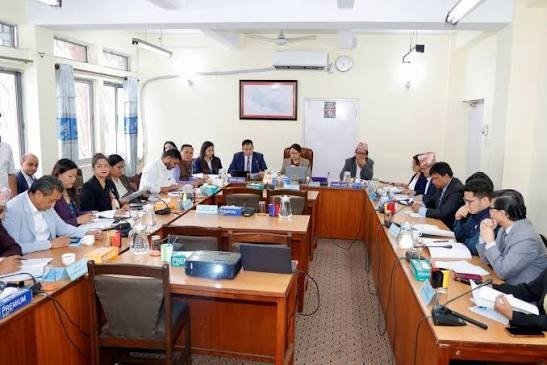
The Education, Health and Information Technology Committee of the House of Representatives has formally endorsed the report on the National Forensic Science Laboratory Bill, 2025, incorporating several critical amendments aimed at modernizing the country’s criminal investigation framework. Convened at Singha Durbar under the chairpersonship of Dr. Ojaswi Sherchan, the committee reviewed and approved the legislative proposal, with Committee Secretary Dasharath Dhamala confirming that the finalized report will now be presented before an upcoming meeting of the House of Representatives for further parliamentary action. The landmark bill is designed to establish comprehensive legal provisions ensuring reliable forensic testing, precise crime classification, and highly effective investigations into serious criminal offenses. During the rigorous deliberation process, participating lawmakers strongly emphasized the urgent necessity of expanding the laboratory’s scope to incorporate specialized testing and investigative protocols for digital and cyber crimes, alongside traditional biological and physical crimes, in response to the rapid rise of technology-driven offenses. Furthermore, committee members underscored the importance of establishing crystal-clear legal guidelines regarding specialized human resources and robust laboratory infrastructure to eliminate chronic delays in forensic testing that often occur after evidence samples are collected from crime scenes. Recognizing that Nepal currently lacks dedicated domestic educational programs to train skilled personnel for advanced forensic laboratories, the committee reached a vital consensus on outlining specific educational qualifications for such technical professionals. To ensure practical implementation, the committee actively requested comprehensive data regarding the number of qualified personnel presently available within Nepal, as well as the exact workforce and infrastructure requirements needed to operate state-of-the-art forensic facilities efficiently. Lawmakers Lima Adhikari (Acharya), Ashok Kumar Chaudhary, and Gopal Sharma had formally registered proposed amendments to the bill, reflecting diverse legislative perspectives. Minister for Science, Technology and Innovation Mahabir Pun addressed the various concerns and queries raised during the amendment process and committee discussions, while senior officials representing the Ministry of Law, Justice and Parliamentary Affairs and the National Forensic Science Laboratory also participated in the session. Having been earlier passed by the National Assembly on February 6, 2026, and transmitted to the House of Representatives with an official message, the bill moves one step closer to enactment. This legislative milestone promises to significantly strengthen Nepal’s judicial and investigative capabilities by bridging critical infrastructure gaps and equipping law enforcement agencies with advanced scientific tools necessary to tackle modern criminal activities effectively across the nation.