How two Nepal hydropower workers survived nine days trapped underground
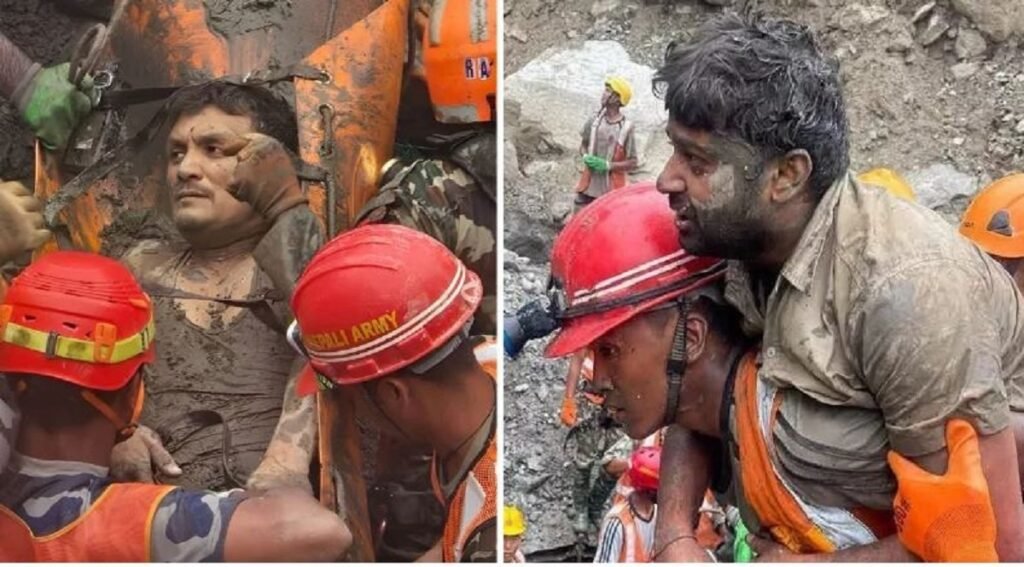
For nine days, mechanical foreman Sanjay Sah and mechanical supervisor Kabir Maharjan were cut off from the outside world inside the underground structures of Nepal’s Trishuli 3A hydropower project.
They emerged alive on Friday, after rescuers reached them following a desperate search that began when floodwaters swept through the project on August 26.
But the two men had ended up underground for very different reasons.
Sah, a 30-year-old employee of the Nepal Electricity Authority from Saptari district, was working his shift in the project’s control room when the flood hit.
Maharjan, from Kirtipur in Kathmandu, had travelled to the project from the Kulekhani hydropower project for scheduled maintenance work. He was working as a mechanical supervisor under a hydropower automation project.
Their accounts after the rescue have offered a glimpse of what happened inside the tunnel as floodwaters surged through the hydropower facility.
‘I could not get out’
Sah was on an operations shift when the flood struck.
Workers were trying to get out as water began entering the underground area. Sah said his priority was to get his colleagues to safety.
“There were usually five or six people, but there were 40 or 45 people at that time,” he told military officials after his rescue.
He said he helped others escape but lost his own chance to get out. “While trying to save them, I made everyone run. That cost me time. In the end, I could not get out,” Sah said.
Sah told the Army’s medical team that he spent his time trapped underground chanting prayers. “I worked in the control room. My responsibility was to save everyone’s life,” he said.
He also indicated that other people may have been trapped deeper inside the tunnel, near the area where he had been stranded.
Sah’s last contact with his family came at around 7 am on August 26, shortly before the flood. His sister, Sudha, said they spoke for about three minutes.
During that conversation, Sah showed his family some of the machinery inside the project. He then told them he was going to continue working.
His phone was switched off afterwards. For days, his family went to police offices and other authorities seeking information and pressing for a rescue operation. They were on their way to Kathmandu after learning that he had been found alive.
Maharjan had gone there for maintenance
Maharjan had not been permanently stationed at Trishuli 3A.
The Kirtipur resident had travelled there from the Kulekhani hydropower project for routine maintenance work. He had worked for the Nepal Electricity Authority for more than 15 years, according to his brother Amir.
Maharjan left home on the morning of August 25, a day before the flood, for the assignment. The following morning, after his family learned of the disaster, they tried calling him, but his phone was switched off.
His family went to the Nepal Electricity Authority headquarters the next day to report him missing. Officials told them that rescue efforts were already underway, raising hopes that he could still be found alive.
Maharjan’s last conversation with his wife, Hira Shobha, was at about 7:30 am on August 26.
He told her that he and his colleagues were going to have breakfast before heading underground to work and warned that his mobile phone might not work there. That was the last time she heard from him.
After his rescue on Friday, his wife said she felt her husband had been given “a second life” and thanked the rescuers who had worked to bring him out.
Both men were taken to Kathmandu for treatment
Both men were given initial medical treatment at the site before being flown to Kathmandu. Maharjan was in serious condition and was admitted to Birendra Sainik Hospital in Kathmandu for intensive treatment.
Sah was in stable condition and was also taken to the military hospital for further tests.
Hira Shobha, the wife of Kathmandu resident Kabir Maharjan, reached Birendra Army Hospital in Chhauni to see her husband.
She said Maharjan had suffered a leg injury and was being treated in the hospital’s intensive care unit.
Maharjan recognised her and told her he was thirsty, she said. “He recognised me and spoke to me, but he is not in a condition to talk much,” she said.
Shobha said she was overwhelmed with happiness to see her husband alive. “I could not stop my tears of joy,” she said.
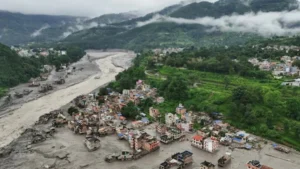
The two men had been trapped after the Bhotekoshi river flooded the area around the Trishuli 3A project on August 26. The flood sent water, mud and debris through the hydropower complex and cut off access to its underground structures.
Rescuers continued searching the facility for signs of survivors. The rescue operation was led by the Nepali Army, with the Nepal Police, Armed Police Force and technical experts involved. Foreign rescue specialists also took part in the effort.