Election Commission begins study on out-of-country, inter-district voting
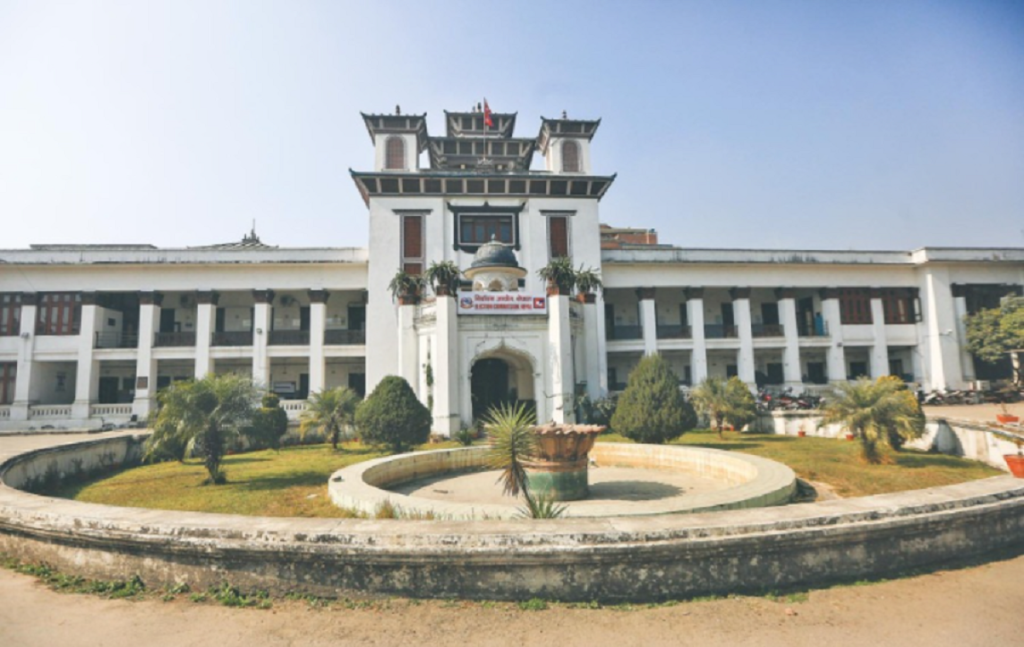
The Election Commission has revived efforts to allow Nepali citizens living abroad and outside their registered constituencies to vote, eight years after the Supreme Court ordered the government to make necessary arrangements.
The commission is examining the legal, technological and administrative arrangements required to introduce what is broadly known as external voting.
Home Minister Sudan Gurung, who met election officials at the commission headquarters on Friday, assured them that the government would support the necessary legislation, infrastructure and technology for the reform.
“Start the preparations and tell us clearly what the government needs to do,” an election official quoted Gurung as telling the commissioners. “Whether it requires legal amendments or technological infrastructure, give us a clear action plan. The government is ready to provide the necessary support.”
The move comes as political parties, youth activists and civil society groups have renewed demands for voting arrangements for Nepalis who live, work or study away from their permanent constituencies, particularly those living overseas.
The issue gained momentum following last year’s Gen Z movement. Ahead of the general elections on March 5 this year, activists and civil society groups campaigned for external voting, arguing that millions of Nepalis living outside the country should not be excluded from elections.
The commission was unable to introduce such arrangements for the March elections, citing a lack of time, the absence of enabling legislation and insufficiently tested electronic voting infrastructure.
The commission’s new leadership has now made electoral inclusion a priority. Chief Election Commissioner Man Bahadur Karki, appointed along with two other commissioners last month, had included voting rights for overseas Nepalis and internal migrants in his work plan presented during his parliamentary hearing.
Speaking at the commission on Friday, Karki said two high-level committees had been formed to determine how the voting system could be implemented.
“This issue has been raised for a long time, and public demand has increased in recent years. Furthermore, the apex court has issued explicit directions on the matter,” Karki said.
“Maximising voter participation is fundamental to a vibrant democracy. The study panels will determine how we can practically manage voting for citizens living overseas or away from their registered home addresses.”
The commission formed the two committees at its board meeting on August 12. The first, led by commissioner Guru Prasad Wagle, will examine the legal framework. It will review existing election laws and propose amendments needed for voter registration abroad, polling stations in foreign countries, the appointment of overseas polling officials and legal recognition of ballots cast outside Nepal.
The second committee, headed by commissioner Rajiv Subba, will examine technology and operational arrangements. Its work will include assessing information technology infrastructure, digital security, administrative logistics and possible voting methods, including physical ballots, postal voting and secure electronic voting.
The committees will draw expertise from several government agencies. The legal panel will include representatives from the Ministry of Law, Justice and Parliamentary Affairs, the Ministry of Home Affairs and the Ministry of Foreign Affairs. The technology panel will include technical officials from the foreign ministry, the Integrated Data Management Centre and the Cyber Bureau of Nepal Police.
Commission spokesperson Narayan Prasad Bhattarai said the coordinators of the two committees had already begun preliminary work. The committees are expected to hold their first full meetings next week after the concerned ministries nominate their representatives.
The commission’s latest initiative follows a Supreme Court directive issued on March 23, 2018 for the government and the Election Commission to make the necessary legal and technical arrangements to enable eligible Nepali citizens living abroad to exercise their voting right.
More than eight years later, Parliament has yet to enact the primary legislation needed to implement the directive. Existing election laws do not provide for voter registration outside Nepal, polling stations abroad, voting through diplomatic missions or electronic balloting.
Implementing external voting would be a major logistical undertaking. Nepali citizens live in around 170 countries, requiring the government and election authorities to establish mechanisms that can operate across different jurisdictions and comply with local laws.
Wagle said his committee would study international practices, treaty obligations and previous feasibility reports before recommending a legal framework.
The commission has previously examined external voting in 2010-11 and 2016-17. Both studies found that the system was logistically challenging but technically possible if introduced in phases and backed by coordination among government agencies.
The 2010-11 study estimated that nearly 4 million Nepalis were living abroad at the time. The number has increased substantially since then. A separate study by the Policy Research Institute before the March 5 elections also concluded that out-of-country voting was feasible if appropriate legal and regulatory arrangements were put in place.
The commission does not envisage introducing external voting simultaneously in every country where Nepalis live. Instead, the study committees will identify countries with large Nepali populations and functioning diplomatic missions as possible locations for an initial pilot.
Gurung has also urged the commission to pursue a phased approach and identify jurisdictions where external voting could be introduced first.
The commission is considering the November 2027 provincial assembly elections as a possible opportunity to test external voting under the proportional representation system, provided Parliament passes the required legislation in time.
Local elections are scheduled for April-May 2027, followed by provincial assembly elections in November 2027. The commission therefore faces a tight timetable if it wants to introduce even a limited external voting system during the next election cycle.
For the reform to become operational, however, legal changes will be essential. The commission can develop technical and administrative models, but Parliament must first create a legal basis for registering voters abroad, establishing polling arrangements outside Nepal and recognising votes cast from outside a voter’s registered constituency.