What makes food sold in most Nepali stores ‘organic’? The label
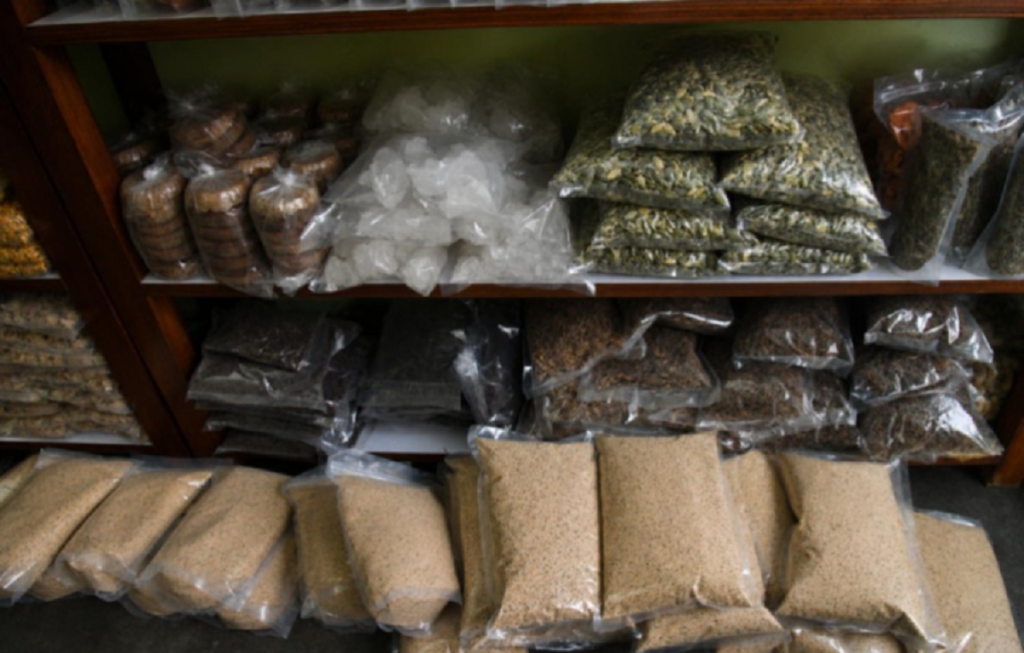
Buyers have developed a habit of trusting the tag on a package rather than demanding proof of the product’s actual quality.For urban residents navigating Kathmandu’s grocery stores, regional delicacies from specific districts carry an almost magical appeal. Beans from Jumla, cliff-bee honey from Surkhet, ginger from Salyan, apples and potato from Mustang evoke pictures of pristine mountain soil. Yet behind the idyllic images printed on slick packaging lies a stark reality—much of what is sold with the labelled ‘organic’, ‘pure’, or ‘100 percent natural’ is nothing more than unverified marketing hype.
Consumer rights activists and agricultural experts have long warned that the city’s appetite for indigenous foods has spawned a lucrative grey market. Urban shoppers willingly pay premium prices for items labelled with revered geographic identities—such as Pokhara’s Jethobudho rice, Jumla’s Simi and Marsi rice, Khopasi’s khuwa, Ilam’s tea, Gulmi’s coffee, or Mudhe’s potatoes—without any guarantee of their origin or chemical purity.
“City dwellers searching for organic and native flavours are ready to empty their pockets without a second thought, lured by beautiful labels and charming product names,” said Bhupendra Nirajan, general manager and food inspector at NEPCERT, one of Nepal’s accredited organic certification bodies. “The uncomfortable truth today is that neither the seller nor the consumer can verify whether these goods actually come from the soil of those remote villages.”
According to Nirajan, consumers have developed a habit of trusting the tag on a package rather than demanding proof of the product’s actual quality.
The systemic disparity between actual agricultural output and market availability was underscored on Friday by Ram Bhakta Adhikari, acting chief of the Agriculture Development Office in Jumla.
“Jumla produces approximately 3,600 tonnes of beans annually, out of which only around 55 tonnes are exported outside the district,” said Adhikari. “Yet in Kathmandu’s supermarkets, online stores, and vegetable outlets, so-called ‘Jumla beans’ are sold in massive quantities all year round.”
This glaring discrepancy points to widespread mislabelling across the supply chain, where produce grown in low-altitude districts using fertilisers is routinely packaged and passed off under high-value mountain brands.“It astounds us as well. Most of the beans harvested in Jumla are consumed locally. While our beans are renowned for their distinct taste and quality, produce from entirely different districts is clearly being passed off under Jumla’s name in Kathmandu,” said Adhikari.
This regulatory vacuum is hardly a new phenomenon in the country’s food market. Various studies show how toxic pesticide residues routinely exceed permissible levels in produce entering urban centres from major farming belts. Despite periodic public outcry over chemical contamination, state mechanisms have consistently failed to implement integrated tracking systems, leaving city markets vulnerable to fraudulent labelling practices.
The Department of Food Technology and Quality Control (DFTQC), the primary state entity responsible for enforcing food safety, has urged consumers not to rely solely on labels when purchasing food items sold as ‘organic’ in the market. The department stated that consumers must check whether products claiming to be organic possess valid certification, warning that traders making false claims will face legal action under existing laws.