West Asia Conflict Raises Alarm for Nepal’s Remittance-Driven Economy
Experts warn prolonged tensions in the Gulf could trigger inflation, job losses for migrant workers and weaker economic growth in Nepal.
Rising geopolitical tensions in West Asia could have serious economic consequences for Nepal, with experts warning that a prolonged conflict may fuel inflation, disrupt remittances and slow economic growth in the Himalayan nation.
Economists highlighted the potential risks during a discussion titled “Problem in the Middle East and Impact on the Nepali Economy” organised in Kathmandu on Friday. Nepal’s heavy dependence on imported fuel and food, along with its large migrant workforce in the Gulf, makes the country particularly vulnerable to instability in the region.
One of the immediate concerns is inflation. According to economist Gunakar Bhatta, a former executive director of Nepal Rastra Bank, rising oil prices linked to the conflict could quickly translate into higher living costs. Studies suggest that a 10 percent increase in global oil prices can push inflation up by about 0.4 percentage points while reducing economic growth by roughly 0.15 percentage points.
Higher fuel prices would increase transportation costs and raise the price of essential goods, hitting low-income households the hardest. Such families spend a large share of their income on necessities like food, energy and rent, leaving little room to absorb rising costs.
The conflict could also disrupt several key sectors of Nepal’s economy. Industries such as construction, transportation, wholesale and retail trade—which contribute significantly to national output—may face slowdowns if global prices surge or supply chains are disrupted. Tourism and agricultural production could also be affected, particularly if fertiliser imports become more expensive.
Another major concern is remittances, a lifeline for millions of Nepali families. Around 40 percent of Nepal’s migrant workforce is employed in Gulf countries, and their earnings form a crucial part of the nation’s foreign exchange reserves. If economic activity slows in those countries or job opportunities shrink due to the conflict, remittance inflows could decline sharply.
A drop in remittances would weaken Nepal’s foreign exchange reserves, reducing the country’s financial stability and its bargaining power with international lenders and partners.
Labour experts also warn of potential social and economic pressures if migrant workers begin returning home. Nepal adds around 500,000 new workers to its labour market each year, and reduced overseas employment opportunities could worsen domestic unemployment.
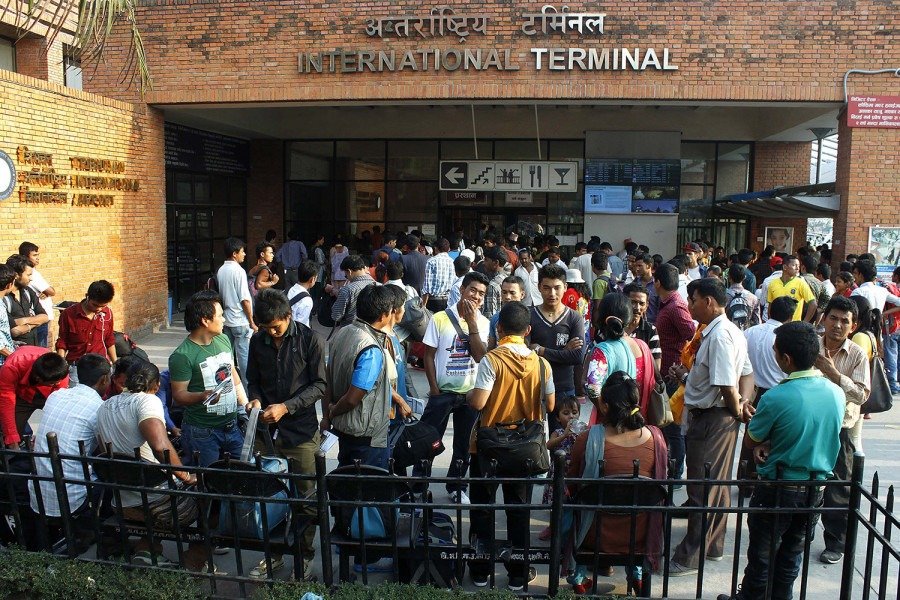
Currently, Nepal issues more than 2,000 labour permits daily, with most workers heading to Gulf countries. If departures remain halted for months due to the conflict, thousands of job seekers could remain stranded at home—many already burdened with loans taken to finance their migration.
Researchers also report growing anxiety among Nepali migrant workers in the Gulf, many of whom say they lack clear safety information as tensions escalate. Experts say the evolving situation highlights Nepal’s deep economic links with the region and the urgent need to monitor the conflict’s potential impact on the country’s economy.