The road accident justice system in Nepal costs lives with cheap fines
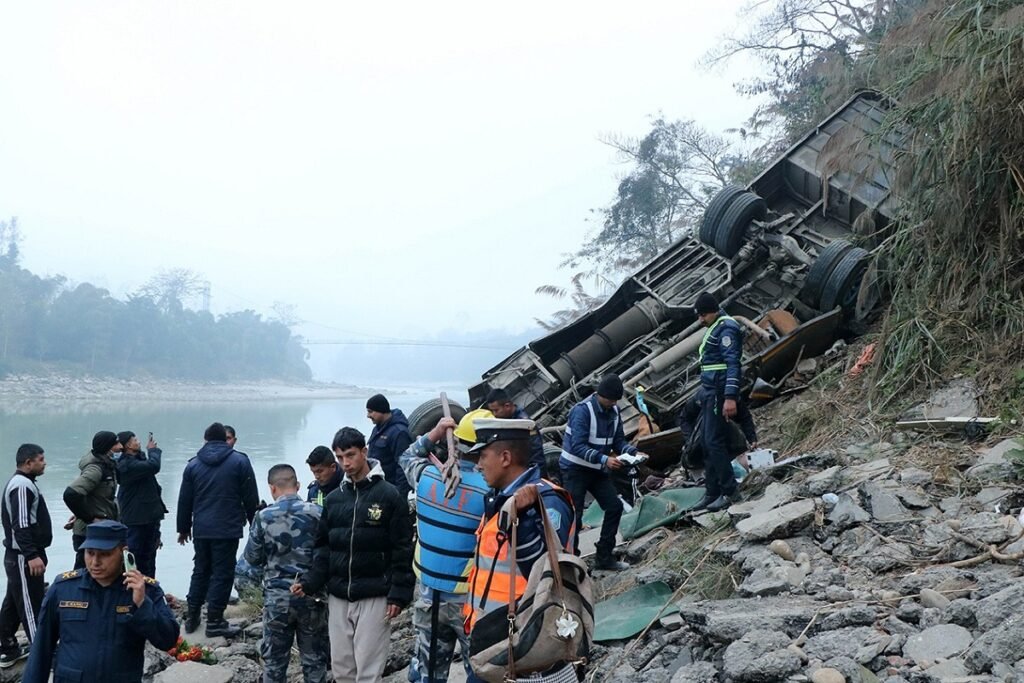
Despite thousands of road accident fatalities each year in Nepal, legal repercussions are often weak due to ineffective enforcement and minimal fines. A notable case occurred on March 6, 2024, when a bus accident resulted in 12 deaths, yet the driver only received a three-year prison sentence and a 40,000-rupee fine, far less than the ten-year sentence sought by the government attorney. Historically, such lenient sentencing has been common, as evidenced by a 2010 case where a driver was acquitted after killing a pedestrian, only to be sentenced to two years in a recent Supreme Court ruling after a 13-year legal process.
Around 2,500 fatalities and nearly 30,000 accidents occur annually, leading to significant socio-economic losses. Reckless driving behaviors—like speeding, alcohol consumption, and ignorance of traffic rules—are major contributors to casualty rates. For instance, a case involving Prithvi Malla, who fatally struck a pedestrian while intoxicated, initially resulted in a mere six-month sentence, which was later increased to four years after public outcry and an appeal.
Public attention to road safety reforms is fleeting, subsiding until another incident occurs. Violations of driving laws are rampant, illustrating systemic failures in enforcement and judicial responses in Nepal. The current legal framework offers inadequate justice, with offenders often escaping with meager penalties, much to the frustration of victims and their families. Legal proceedings under the Vehicles and Transport Management Act, 2049 BS (1993) tend to impose maximum sentences of three years and fines of only 2,000 rupees. Deputy Attorney General Sanjiv Raj Regmi highlights that these inadequate penalties fail to deter accidents or compensate victims properly, and advocates for stricter accountability and enforcement measures.
While the Act does stipulate life imprisonment for intentional vehicular homicides, practical difficulties exist regarding the timely definition of death post-accident. Furthermore, varying penalties depending on accident circumstances often lead to protracted court resolutions. Regmi and the Office of the Attorney General are pushing for legal amendments focusing on driver intent and victim compensation. Concerns are raised that existing laws disproportionately penalize drivers without addressing broader safety issues like vehicle maintenance and compliance.
Law enforcement challenges, including potential collusion between police and attorneys, worsen the current legal deficiencies. In the fiscal year 2024/25, over 5,000 vehicular homicide cases were reported, reflecting a serious issue within the legal system. The Supreme Court case of Nepal Government v. Kalu Chaudhary criticized symbolic punishments leading to a lack of accountability, urging judicial measures to enhance road safety and proper driver assessments. Road safety expert Bhagwati Sedhain compared the situation to a pandemic and proposed technological solutions like CCTV to enforce laws more stringently. She emphasized the need for valid licensing, route permits, and strict restrictions against overloading and driving under influence to improve safety.
Vehicle accidents represent a serious socio-economic threat, affecting economically active individuals and draining state productivity. The ongoing challenge of road safety in Nepal is exacerbated by insufficient resources for effective accident management. Som Raj Kafle, District Government Attorney in Dhading, notes that increasing accidents result from poor enforcement of transportation laws and inadequate monitoring of driver behavior and road conditions, predicting continued alarming reports of road incidents in the future.