Nepal Revives Parliamentary Norm: Lawmakers to Take Oath Before Government Formation
In the 2017 House of Representatives election in Nepal, the CPN (UML) and CPN (Maoist Center) formed a left alliance, achieving nearly a two-thirds majority. The CPN (UML) emerged as the largest party, securing 121 seats, while the CPN (Maoist Center) garnered 53 seats. This led to a situation in which the newly elected members had not yet taken their oaths when, on February 15, 2018, CPN (UML) Chairman KP Sharma Oli claimed the position of Prime Minister backed by a letter of support from the CPN (Maoist Center). According to Article 76 (2) of the Constitution, a member of parliament (MP) could be appointed Prime Minister with the support of multiple parties, allowing then-President Bidya Devi Bhandari to appoint Oli despite the House lacking a single party majority.
The appointment of the Prime Minister before the MPs took their oaths triggered significant debate regarding parliamentary norms and the established practice which typically dictates that MPs take their oaths before government formation. Critics argued that this violated the principles of parliamentary democracy, wherein Parliament should be supreme, and its members’ roles in government formation are vital. Typically, parliamentary practice requires the oath to be administered firstly to newly elected MPs, followed by a subsequent process for forming a government. However, Oli’s appointment came from the President’s office via a submission of signatures rather than through the traditional parliamentary path.
In contrast, after the 2022 House of Representatives election, the practice was amended. MPs were sworn in prior to the appointment of the Prime Minister. On December 22, 2022, the eldest member, Pashupati Shumsher Jung Bahadur Rana, administered the oath, and Pushpa Kamal Dahal of the CPN (Maoist Centre) was appointed Prime Minister on December 25, having the support of seven parties, including the CPN (UML) and independent MPs. Notably, this time, the government formation adhered strictly to Article 76 (1), which stipulates that the President must appoint the leader of the parliamentary party commanding a majority after the MPs’ swearing-in.
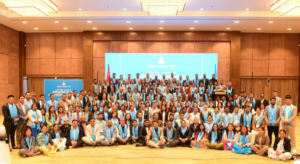
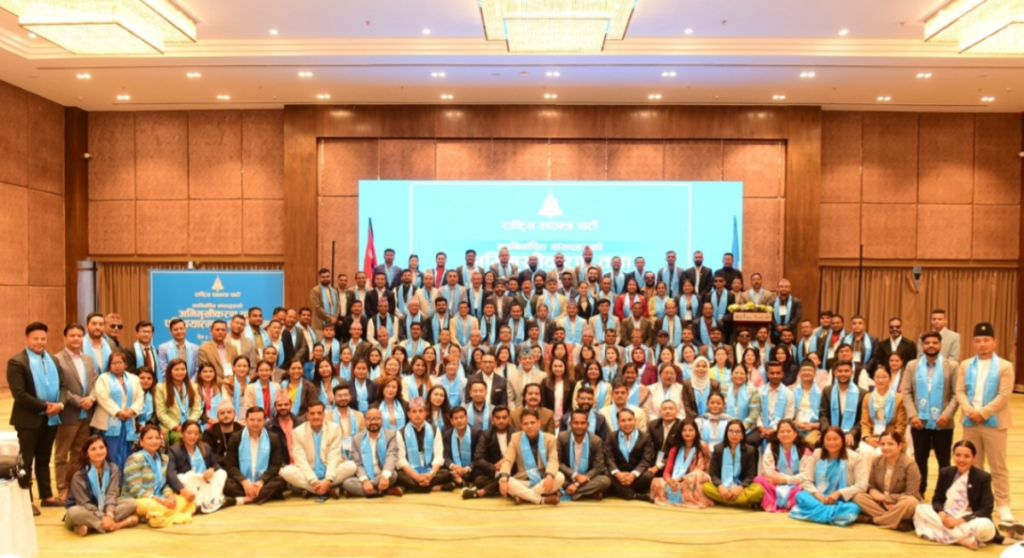
In the recent elections, the Rastriya Swatantra Party (RSP) crossed the majority threshold of 182 seats and is set to create a single-party government, signifying a significant shift since no prior party had this opportunity in the last elections. The Federal Parliament Secretariat has arranged an oath of office and secrecy for the newly elected members scheduled for March 26. As per procedure, the eldest member Arjun Narsingh KC will first be sworn in by President Ram Chandra Paudel, allowing him to administer the oath to the MPs, who are expected to attend in formal attire. Balendra Shah, referred to as Balen, will assume the role of parliamentary party leader for RSP and is positioned to take his oath on March 27. While the President’s Office noted no formal notification had been received regarding the Prime Minister’s swearing-in, constitutional experts maintain that it is not unprecedented for a Prime Minister to be appointed before the oaths post-election, aligning with practices observed in other parliamentary democracies like the UK and India, where a party with a clear majority typically chooses its leader and announces the Prime Minister thereafter.