Nepal Developing Long-Term Strategic Framework to Protect Citizens in Conflict Zones
The Government of Nepal has announced the development of a comprehensive, long-term strategy aimed at ensuring the safety and security of its nationals residing abroad. This move comes in response to the escalating conflict in West Asia and the ongoing U.S.-Israeli war on Iran, which have highlighted the vulnerabilities of millions of Nepali workers. For decades, successive administrations have relied on ad hoc measures to manage international crises. However, the current government, led by the Rastriya Swatantra Party as part of its 100-point roadmap for good governance, is shifting toward a proactive, institutional approach that can be automatically triggered during global emergencies.
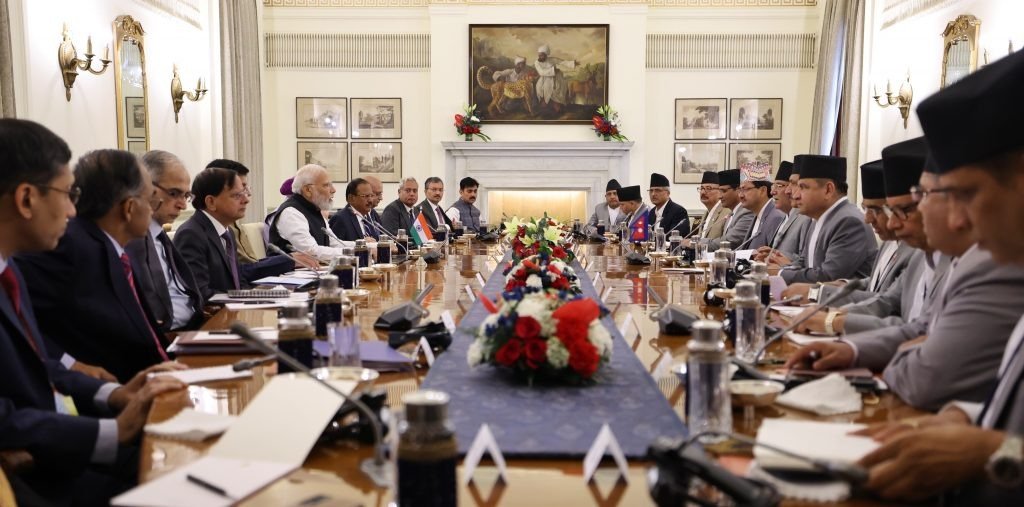
Foreign Minister Shishir Khanal is currently leading an eight-member panel tasked with recommending these new policies and strategies within a 30-day window. The committee is conducting an intensive study on the regional and sectoral impacts of the West Asian crisis, specifically focusing on its effects on global migration, labor mobility, cross-border trade, and energy security. This study aims to produce a high-level report detailing short-, medium-, and long-term programs. According to Lok Bahadur Poudel Chettri, head of the public diplomacy division at the Ministry of Foreign Affairs, the goal is to create a permanent monitoring mechanism that allows the state to act promptly whenever conflict arises, rather than waiting for a situation to deteriorate.
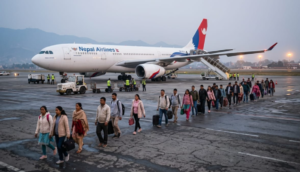
The immediate focus of the panel also includes addressing the grievances of approximately 300 Nepali citizens currently facing acute difficulties in the region due to health issues, family emergencies, or contract disputes. With commercial flight options limited, the government is exploring the deployment of Nepal Airlines to repatriate those in distress. Already, special non-scheduled flights have been coordinated to Dubai and Dammam to bring home stranded citizens and the remains of those who have passed away. Recently, Kuwaiti authorities also supported these efforts by sending a chartered flight to Bhairahawa carrying 291 deportees and nine dead bodies, marking a significant moment of bilateral coordination during the suspension of regular airspace.
The scale of the challenge is immense, as government records estimate that over four million Nepali nationals live and work outside of India. More than two million are concentrated in the Persian Gulf region alone, with an additional half-million estimated to be working there without formal documentation. The Ministry of Foreign Affairs is currently overwhelmed by the volume of inquiries, with the passport and consular departments receiving over 2,300 queries daily, while international missions handle more than 5,000 calls. To manage this demand, the government plans to implement an integrated, technology-based system to streamline communication and ensure that grievances are addressed systematically.
By moving away from reactive planning, Nepal seeks to safeguard its most valuable export—its labor force—which currently reaches 173 countries worldwide. The proposed reforms aim to modernize the tax and labor frameworks while ensuring that the state provides a reliable safety net for its citizens, regardless of where they are employed. As the Khanal-led committee nears the completion of its study, the transition toward a “growth-friendly” and security-oriented foreign policy marks a pivotal step in Nepal’s administrative evolution, prioritizing the welfare of its global diaspora during a period of intense geopolitical volatility.