Gateway to the Galaxy: Nepal Announces Bold Plans for Swargadwari Spaceport
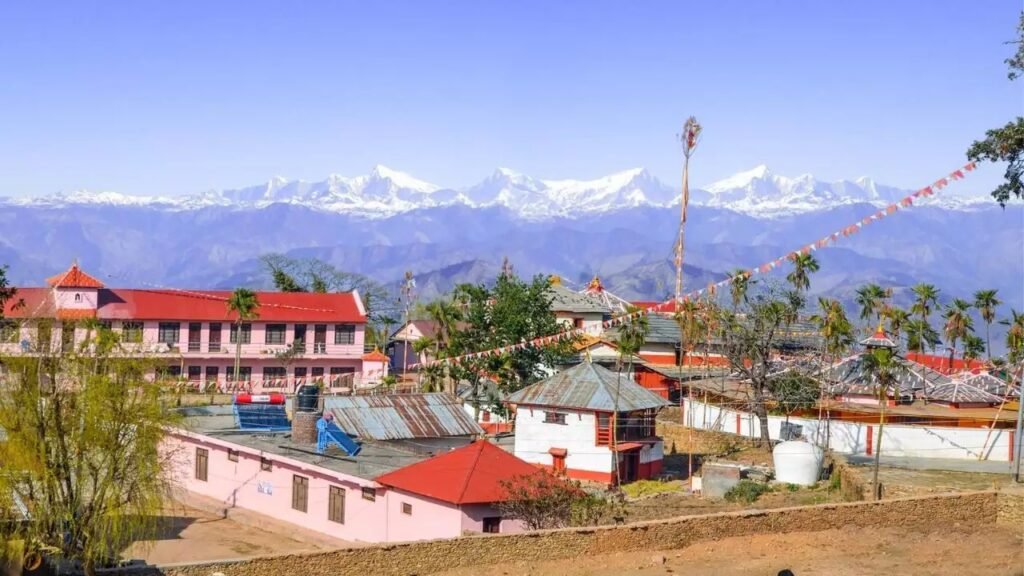
In a move that seeks to bridge the gap between ancient spirituality and futuristic engineering, the Government of Nepal has announced a project of cosmic proportions. Swargadwari, the revered “Gateway to Heaven” in Pyuthan, has been designated as the site for the nation’s first-ever satellite launch facility. Officials claim a rare convergence of geomagnetic factors and vertical efficiency makes this sacred hilltop the most cost-effective path to orbit on the planet. The announcement follows a technical study by a consortium of researchers who identified Swargadwari’s unique atmospheric and geographic positioning as “scientifically inevitable” for space exploration. Though the site sits at an elevation of roughly 2,100 meters, consultant physicists argue that its “vertical efficiency index” significantly reduces atmospheric drag. Projections suggest that launching from this spiritual landmark could reduce fuel requirements by as much as 11 percent, offering a massive competitive advantage in the global satellite market.
The proposed Swargadwari Spaceport is set to be developed in phases, beginning with small-satellite and “cube-sat” deployments. According to the Nepal Academy of Science and Technology, the project will uniquely integrate modern engineering with traditional practices. Mission control facilities will be established near the existing ashram complex, and launch windows will reportedly be coordinated with auspicious celestial timings. There are even discussions regarding the use of ritual fire as a symbolic part of the pre-ignition protocol.
The economic implications for the region are potentially transformative. The Ministry of Finance suggests that the spaceport could generate hundreds of millions of dollars annually through service fees and high-value tourism. The Nepal Tourism Board is already looking into branding the area as a dual-purpose destination where visitors can witness both Vedic rituals and high-tech rocket launches. Local residents in Pyuthan have met the news with cautious optimism, hopeful that the project will bring much-needed infrastructure and road upgrades to the district.
However, the project is not without its sensitivities. Local spiritual leaders have called for a strict balance between commercial development and the sanctity of the shrine. They emphasize that while the world looks toward the stars, the “shraddha” or faith of the pilgrims must remain undisturbed.
As feasibility studies move into their final stages, Nepal is reframing its national identity. No longer just a landlocked nation, the government now describes the country as “sky-connected.” If the celestial and technical factors align, the “Gateway to Heaven” may soon live up to its name in a way the ancestors never imagined—carrying Nepal’s aspirations far beyond the horizon.