
Asia-Pacific Forum on Sustainable Development Calls for Urgent Push on SDGs as 2030 Deadline Nears
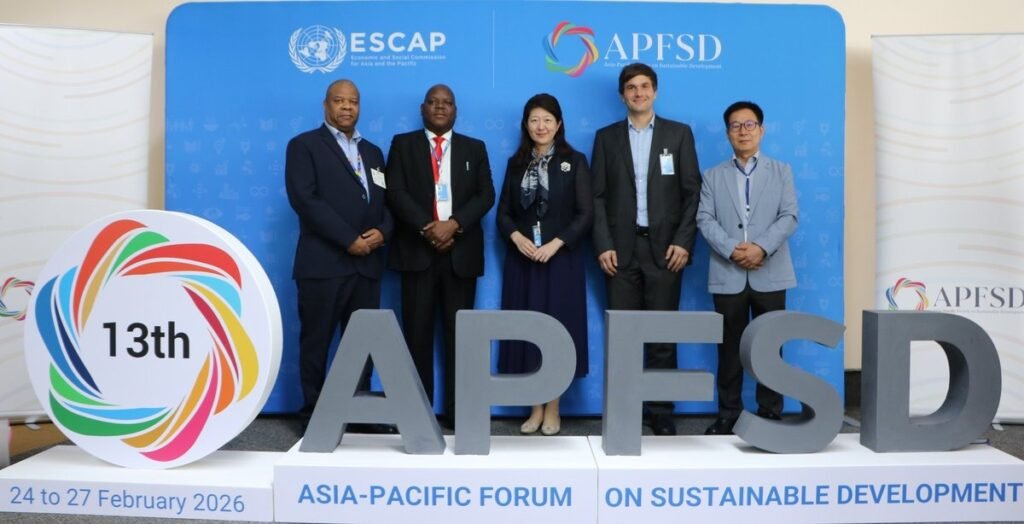
Leaders and development partners from across the Asia-Pacific region have urged faster and more coordinated action to achieve the Sustainable Development Goals (SDGs), warning that progress remains uneven with just five years left until 2030.
The call came at the opening of the 13th Asia-Pacific Forum on Sustainable Development (APFSD), convened by the United Nations Economic and Social Commission for Asia and the Pacific in Bangkok.
Addressing delegates, ESCAP Executive Secretary Armida Salsiah Alisjahbana cautioned that weakening multilateral cooperation could slow technology transfer, financing, and global partnerships critical for sustainable development. She noted that Asia-Pacific, now a major hub for finance and innovation, has strong implementation capacity but must deepen regional collaboration to meet growing challenges.
Lok Bahadur Thapa, President of the United Nations Economic and Social Council, highlighted the importance of the Pact for the Future in reinforcing global commitments. He stressed that regional cooperation on climate resilience, trade, connectivity, and social protection can strengthen global accountability and stability.
Tonga’s Minister of Internal Affairs, Fane Fotu Fituafe, was elected Chair of the four-day forum. She underscored the forum’s role in tracking progress and promoting innovative, inclusive, and equitable development strategies.
Participants acknowledged improvements in access to drinking water and sanitation but noted that safely managed services remain limited in poorer and climate-vulnerable countries. Increasing droughts, floods, and saltwater intrusion are intensifying water insecurity, especially in small island and landlocked states.
Although electricity access is nearly universal in much of the region, reliability and affordability continue to challenge remote and island communities. Rapid digital expansion has also failed to ensure inclusive access, with gaps in digital skills and affordability persisting.
Speakers emphasized stronger political leadership, data-driven policymaking, and deeper engagement with civil society and the private sector to accelerate progress.
On the sidelines, ESCAP partnered with the Asian Development Bank and the United Nations Development Programme to launch the 2026 Asia-Pacific SDG Partnership Report titled Inclusive Urban Futures: From Inequality to Opportunity.
The report highlights widening urban inequality, revealing that 697 million people live in slums, over 65 percent of urban workers are in informal employment, and 2.3 billion people face unsafe air pollution levels. It calls for people-centered urban planning, expanded decent work opportunities, and stronger climate resilience measures.
As the 2030 target approaches, leaders stressed that accelerated, cooperative action will be crucial to ensure no one in the Asia-Pacific region is left behind.