An outpouring from glacier lake caused the Rasuwagadhi flash flood
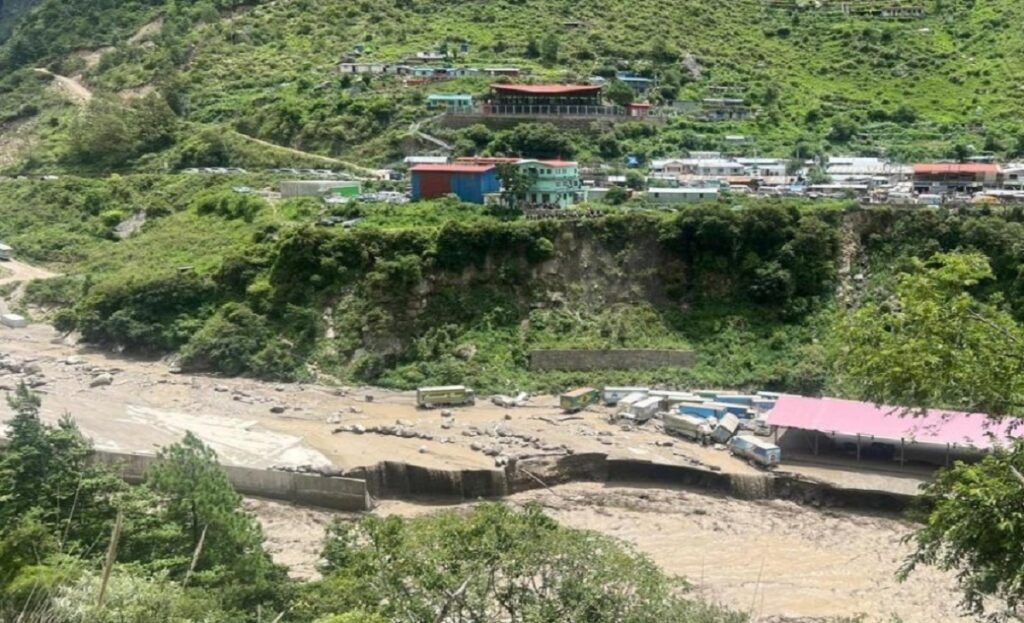
The Nepal-China border flash flood in Rasuwa, Nepal, was attributed to a glacial lake outburst, according to a preliminary study using Sentinel satellite images. Flood forecasting division chief Binod Parajuli reports lake located 36 km north of Rasuwagadhi, Nepal-China border, within Lhende River catchment area, at 5,150 meters altitude. The supraglacial lake was around 0.75 square kilometers before the flood, according to a special advisory issued by DHM on Thursday. However, post-flood photos reveal that its area has shrunk to about 0.60 square kilometers. According to the report, this decrease points to a substantial lake water outflow that will affect towns downstream.
The DHM’s analysis of NDWI and NDVI images from July 5, 2025, and 8, 2025, confirmed changes in the lake’s surface and downstream region, confirming water release from the lake. The shrinkage of the glacial lake’s area also confirmed the release of water, triggering the flood, according to the DHM. The government thinks that new satellite photography will validate these conclusions and that it will get additional on-site reports from China. According to Parajuli, the DHM will keep up its current investigation and offer updates. Separately, researchers from the ICIMOD have verified that a glacial lake outburst from the Lhende River, which is close to the Nepal-China border, was the cause of the Bhotekoshi River flood in Rasuwa.