Abuse of Authority a “Serious Blow” to State Legitimacy, Declares President Paudel
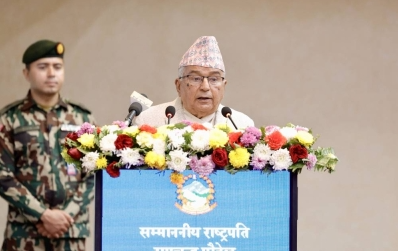
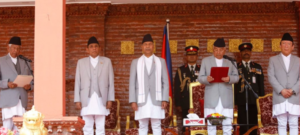
Addressing a special program marking the 35th Establishment Day of the Commission for the Investigation of Abuse of Authority (CIAA), President Ramchandra Paudel issued a stern warning against corruption, labeling the abuse of power as a fundamental threat to social justice and the state’s legitimacy. He emphasized that the misuse of public office is not a minor lapse in judgment but a grave violation of the law that dismantles the bridge of trust between the government and its citizens. According to the President, when public power is exploited for personal gain, it weakens the rule of law and undermines the core values of democracy, leaving the citizenry disillusioned with the system.
President Paudel called upon authorized bodies, particularly the CIAA, to act with renewed vigor to ensure that no individual is exempt from legal accountability, regardless of their position or political influence. He argued that the root of corruption lies in an insatiable hunger for power and wealth, suggesting that the vice can only be eradicated if transparency, integrity, and impartiality are embraced as a way of life. The President highlighted that the fight against corruption is not the burden of a single institution but a collective responsibility shared by political leadership, the bureaucracy, and civil society.
During his address, the Head of State noted that the aspirations of the Constitution—specifically accessible service delivery and good governance—remain the primary goals of the nation. He pointed to recent youth movements as a clear expression of the public’s desire for a more accountable system, urging those in power not to ignore these voices. President Paudel stressed that a strong political will is the “first condition” for success in this struggle. He expressed his belief that a positive shift in the work culture of political officials would naturally guide the administrative sector toward higher standards of accountability.
Ultimately, the President framed the struggle against the abuse of authority as a broader fight for equality and justice. By fostering a system defined by discipline and ethical conduct, he believes Nepal can restore public trust and hand over a “clean, competent, and reliable state” to future generations. He concluded by wishing for greater effectiveness in policy and technological reforms to institutionalize good governance across all levels of the state apparatus.