Landless Squatters Rally Against Vacate Notice in Nepal’s Bagmati Province Without Resettlement Plan
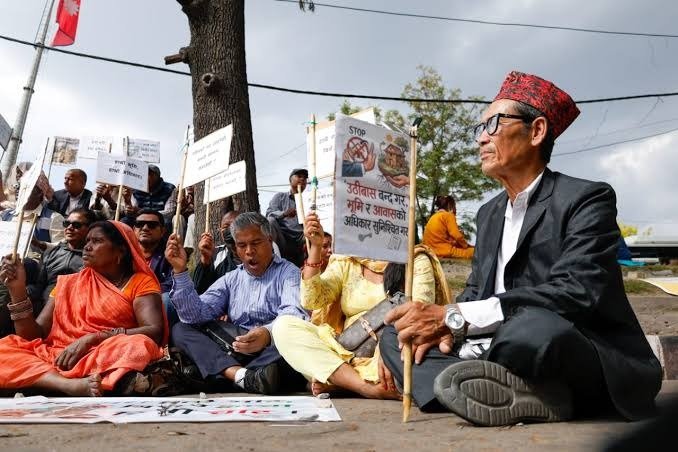
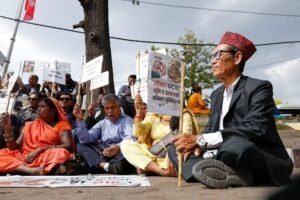
Displaced families sheltered at a holding centre in Nepal’s Bagmati province staged vigorous protests on Friday against the local administration’s decision to evict them from the facility without securing concrete alternative resettlement arrangements. At the Bode holding centre in Bhaktapur district, which houses approximately sixty individuals, district authorities enforced a strict 2:00 PM Friday deadline to vacate the premises and deployed dozens of police personnel to oversee the clearance. Tensions escalated sharply when members of the displaced households, including women and children, protested by banging empty plates after local officials abruptly halted their food supply ahead of the eviction deadline. The confrontation followed a formal Wednesday vacate notice issued by the Bhaktapur District Administration Office and subsequent police announcements on Thursday evening instructing occupants to leave by the next afternoon. In response, affected residents from Bode, Kharipati, and Ichangu Narayan jointly submitted a memorandum to local authorities on Thursday demanding the immediate withdrawal of the eviction order. Clarifying the administration’s stance, Bhaktapur Chief District Officer Binod Kumar Khadka maintained that security forces did not use physical force to clear the shelter, explaining that the notice aimed to encourage voluntary departure so eligible families could register for government-promised land distribution. Khadka noted that authorities have finalized a resettlement framework under which many occupants from other holding centres have already vacated after accepting a lump sum of twenty-five thousand Nepalese Rupees for immediate housing alongside fifteen thousand Nepalese Rupees monthly for three months prior to receiving formal land ownership certificates. Despite these assurances, senior human rights activist Charan Prasai strongly condemned the eviction of vulnerable squatters lacking immediate shelter alternatives. This standoff reflects a broader nationwide housing crisis triggered since Prime Minister Balendra Shah assumed office in March this year, during which more than fifteen thousand landless squatters have been removed from informal settlements across Nepal and placed into temporary holding centres. Simultaneously, Prime Minister Shah has issued strict directives to top security officials, including Inspector General of Police Dan Bahadur Karki and Armed Police Force Chief Raju Aryal, to clear longstanding squatter settlements along the Bagmati River bank in Kathmandu’s Thapathali area over the weekend—reviving a contentious clearance drive he previously attempted unsuccessfully as Kathmandu Mayor. While Nepal’s Supreme Court recently issued an interim order halting certain bulldozer demolitions and directing the government to safeguard shelter, food, education, and healthcare for displaced citizens until a final verdict is reached, Friday’s confrontation in Bhaktapur underscores the acute friction between aggressive urban clearance policies and fundamental humanitarian protections. As thousands of evicted families await promised land titles and interim financial relief, rights advocates warn that abrupt shelter closures and suspended rations risk deepening destitution among Nepal’s most marginalized urban populations.