Crossing the border for a better education
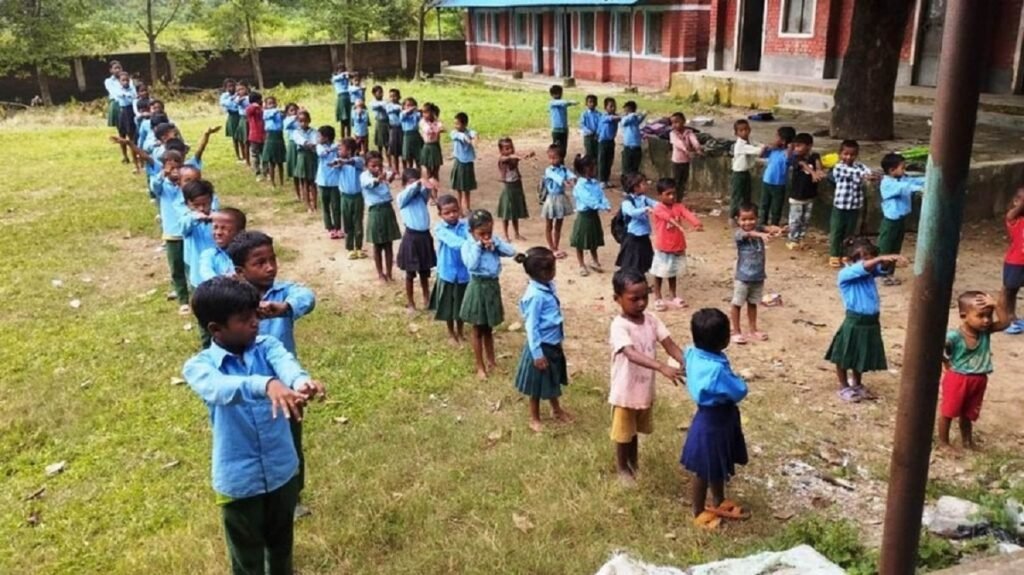
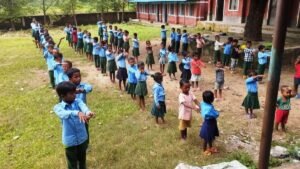
Every morning, children from villages in India make their way into Nepal, some travelling by rickshaw, others on foot. They join their Nepali classmates to sing the national anthem before heading into their classrooms.
The scene has become increasingly familiar at schools in border districts such as Jhapa, Bardiya and Rautahat. Unable to find satisfactory schooling close to home, these children are crossing an international border for their education.
The movement reflects the longstanding social and cultural ties between communities on either side of the Nepal-India border, traditionally described as roti-beti relations, rooted in shared livelihoods and family connections. While many Nepali students travel to India for technical and higher education, the flow also runs in the opposite direction. Schools in parts of Koshi, Madhesh and Lumbini provinces have become regular destinations for Indian children seeking primary and secondary education.
In Jhapa, children from Dalle village in India’s Bihar state travel about two kilometres to attend school in Kachankawal rural municipality-5. The communities on both sides of the border share close social ties, making the daily journey to Nepal a familiar routine for families in Dalle.
Around half a dozen children from the Indian village attend Devi Basic School. They arrive every morning by rickshaw and confidently join their Nepali classmates in singing the national anthem. Unless someone asks, it is difficult to tell that they are Indian citizens. A video of the children singing Nepal’s national anthem alongside their classmates has gone viral on social media.
Headteacher Jaya Singh Rajbanshi says the children attend regularly, despite the distance. Their village has limited access to schooling, and the quality of teaching there is a concern, he said.
“They always come to school by electric rickshaw. They complain that the school in their village is far away and the teaching is not particularly good,” Rajbanshi said. For the children, he added, studying in Nepal is less a matter of preference than necessity.
Another school in the same ward, Buddha Basic School in Khungaru Bhitta, also draws around a dozen pupils from India. Their journey involves crossing the Jhing stream, which separates the two countries.
Headteacher Kushpata Lal Rajbanshi said the children take risks to reach school but remain committed to their studies. “They are dedicated to their studies despite the risks involved in getting here. There is no language barrier, and they work hard,” he said.
Koshi Provincial Assembly member Nimsari Rajbanshi sees the cross-border school journeys as an expression of people-to-people ties that have endured beyond national boundaries.
“Political relations between the two countries or debates about national identity have not stopped them from going to school. Their priority is simply a good education,” she said. Family ties, kinship and social relationships extend across the border, she added, and education has become another part of that shared life.
In Bardiya, too, Indian families are sending their children to Nepal because they see better educational opportunities across the border.