At COP31, Nepal Leads Regional Push to Include Mountain Protection in Global Climate Agenda
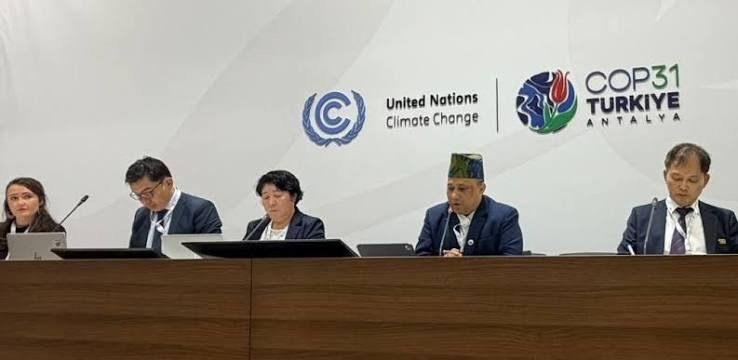
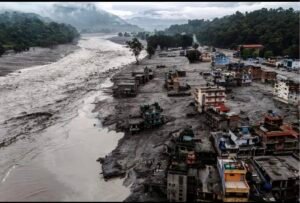
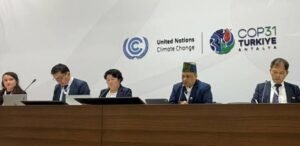
Nepal’s Foreign Minister Shisir Khanal has issued a compelling call for global climate justice, urging the international community to take concrete action to mitigate the severe environmental risks threatening the Himalayan region. Addressing the opening plenary of the 31st Conference of the Parties (COP31) to the United Nations Framework Convention on Climate Change (UNFCCC) in Antalya, Turkey, Khanal emphasized that preserving the Himalayas is essential for sustaining millions of lives and livelihoods across Asia. While Nepal contributes negligible amounts to global greenhouse gas emissions, its vital glaciers are melting at an alarming rate due to rising global temperatures. In response, Khanal outlined three core demands: strictly enforcing the 1.5°C global warming limit with specific focus on fragile mountain zones, establishing a dedicated action plan on mountains and climate change, and incorporating mountain-specific indicators into broader adaptation and finance frameworks, such as the Global Goal on Adaptation and the New Collective Quantified Goal on Climate Finance. Highlighting regional cooperation, Khanal noted that Nepal, Bhutan, and Kyrgyzstan jointly pushed to establish mountain protection as a formal COP31 agenda item, pointing out that mountain regions encompass roughly 27 percent of Earth’s land surface and support 15 percent of the global population. Khanal showcased Nepal’s proactive domestic sustainability efforts, including maintaining community-managed forests across nearly half of its land area, relying heavily on clean hydropower, and ensuring that over 70 percent of newly purchased passenger vehicles are electric. Referring to recent natural disasters that devastated local communities, Khanal expressed gratitude for international sympathy but stressed that global solidarity must now translate into tangible systemic support, financial assistance, and direct implementation. Reaffirming Nepal’s alignment with the Group of 77, China, Least Developed Countries, Landlocked Developing Countries, and the Mountain Group, he called upon all participating nations to show decisive commitment toward protecting vulnerable mountain ecosystems worldwide.