Monthly Rent Scheme of Rs 15,000 for Landless Settlers Under Consideration

The government is preparing a new social support programme that would provide monthly house rent assistance of Rs 15,000 to genuine landless settlers who do not possess land ownership certificates, according to officials familiar with the plan.
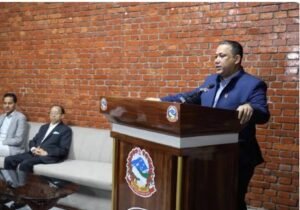
The proposal was discussed in a recent meeting of the State Affairs and Good Governance Committee under the House of Representatives, where Chairperson Hari Dhakal confirmed that the initiative is aimed at offering temporary relief to vulnerable households until long-term resettlement solutions are implemented. The support is intended as an interim measure for families who have been identified as genuinely landless and are awaiting formal land allocation.
Officials from the Ministry of Urban Development and the Ministry of Federal Affairs and General Administration briefed lawmakers during the committee meeting held on Thursday. They provided updates on ongoing efforts to manage squatters and informal settlements, particularly in urban areas of Kathmandu Valley.
According to the ministries, the government is currently carrying out screening and verification exercises to identify authentic squatters and landless individuals residing in various holding centres and informal settlements across Kathmandu. This process is being conducted to ensure that assistance reaches only eligible beneficiaries and to prevent duplication or misuse of government resources.
The proposed rent assistance scheme is expected to benefit displaced families from settlements in areas such as Thapathali, Gairigaun, Manohara and other parts of Kathmandu where eviction or relocation drives have taken place in recent years. These groups have often faced challenges in securing stable housing after being removed from encroached or unsafe land.
Officials stated that the necessary financial resources for the programme have already been arranged, indicating that the scheme is in an advanced stage of planning. However, implementation will depend on the completion of the ongoing verification process and final approval mechanisms within the government.
The initiative reflects a broader policy shift towards temporary housing support as authorities work on long-term solutions, including formal land allocation and resettlement planning for landless populations. Lawmakers noted that the challenge lies in balancing urban management, land use regulation and social protection for vulnerable communities.
Further details on eligibility criteria, duration of support, and implementation timelines are expected to be announced once the screening process is completed and the programme is formally rolled out.