Local Residents Vow Protests as Ministry Attempts to Move Lumbini’s Electric Buses to Kathmandu
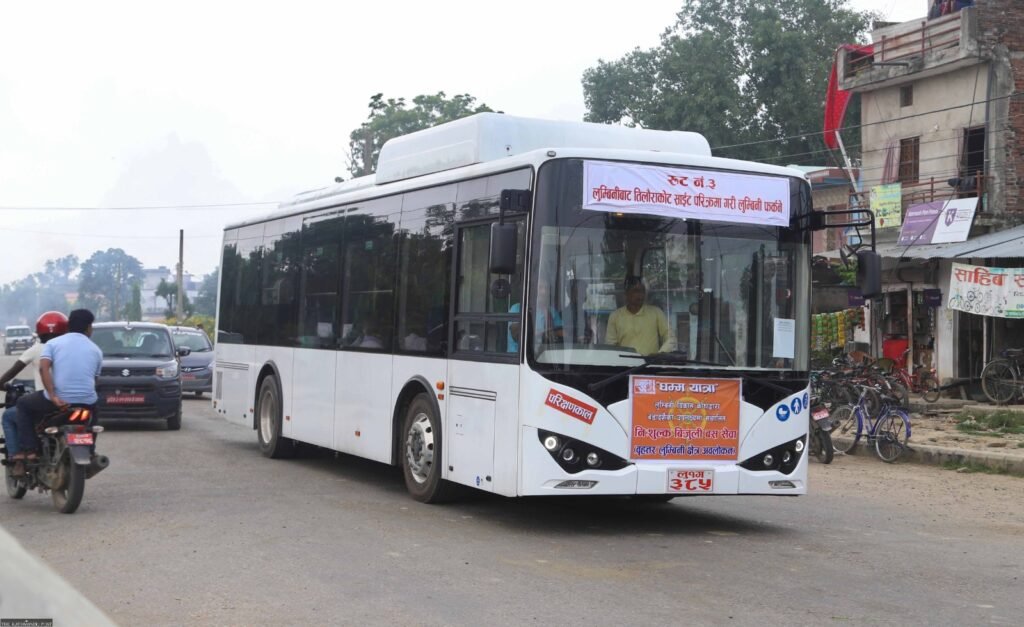
Five years after being imported to revolutionize tourism along the Buddhist circuit, a multi-million rupee fleet of electric vehicles gifted to the Lumbini Development Trust remains grounded. Despite a significant investment and a push for green energy, the project has become a symbol of administrative failure, political infighting, and chronic mismanagement. The fleet, consisting of five state-of-the-art electric buses and 14 vans, was acquired through a ₹130 million grant from the Asian Development Bank under the Clean Energy Project in 2020. However, instead of transporting pilgrims between the holy sites of Belahiya, Lumbini, and Tilaurakot, the vehicles are currently gathering dust on the premises of the Civil Aviation Authority of Nepal at Gautam Buddha International Airport. After a brief, 48-hour operation earlier this month—triggered by a direct order from the prime minister’s office—the buses were once again handed back to aviation authorities, highlighting a persistent lack of a sustainable operational framework. The project has been plagued by “number plate politics” and legal hurdles since its inception. Initially registered with government plates, the vehicles were legally barred from carrying fare-paying tourists. It took a High Court writ petition and three years of delays to finally secure the green plates required for tourist transport. Despite this legal victory, the Lumbini Development Trust admits it lacks the technical manpower and budget to hire drivers and conductors. Internal reports suggest the trust’s financial health is so fragile that it is struggling to pay existing staff, let alone maintain a sophisticated electric fleet. Adding to the controversy are allegations of personal misuse. While the larger buses sit idle, local stakeholders claim the 14 electric vans—intended for visitors—are frequently used by trust officials for personal family trips. Meanwhile, the physical condition of the assets is rapidly deteriorating. Several vehicles have sustained damage to windshields and batteries due to exposure to the elements and sporadic “populist” operations during past election cycles. A sophisticated, ADB-funded charging station near the Lumbini gate also remains largely unused due to the lack of a functional shuttle schedule. The crisis reached a boiling point last month following a ministry-level decision to move the buses to Kathmandu. This sparked fierce opposition from local residents and civic leaders, who have threatened hunger strikes and sit-ins to prevent the resources from being siphoned off to the capital. Critics, including the Lumbini Hotel Association, have slammed the trust for being “tourism-unfriendly,” arguing that the failure to connect the airport to holy sites is sabotaging a sector still recovering from the 2015 earthquake. Underlying these management failures is a deep-seated culture of partisan interference. Observers note that the leadership of the trust is split among various political parties, leading to a deadlock where development projects are constantly stalled by internal rifts. Religious leaders in the region have echoed these sentiments, attributing the dysfunction to a system of political appointments over competent leadership. As the electric buses continue to sit idle in Bhairahawa, the vision of a clean, efficient Buddhist circuit remains a distant dream. Without a clear directive that satisfies both the local stakeholders and the central government, these high-tech assets—capable of traveling 400 kilometers on a single charge—will continue to rust, representing a massive waste of international aid and national resources. The world looks on as one of the most significant tourism initiatives in the region remains paralyzed by bureaucracy.