Celebrity Culture Gains Ground in Nepal’s Political Arena
Ek Prem Katha highlights the issue of open defecation in India and the need for proper sanitation at home. The film received mixed reactions; while it was praised for addressing a critical social problem, it was also labeled a ‘propaganda’ piece for the Swachh Bharat campaign of Prime Minister Narendra Modi, evidenced by government actions such as tax exemptions and Akshay Kumar’s role as a cleanliness ambassador. The relationship between cinema and politics is long-standing in India, with actors often stepping into political roles, such as Amitabh Bachchan, who won a 1984 election but left politics after three years due to its demanding nature. In South India, the connection appears stronger, with figures like M. G. Ramachandran and J. Jayalalithaa successfully transitioning from film to political leadership. This trend is attributed to linguistic state reorganization and regional movements emphasizing the cinematic portrayal of heroes, resonating with public sentiments, and shaping political landscapes. Cinematic narratives have also been critiqued for promoting anti-minority sentiments, reflecting broader societal tensions and historical narratives.
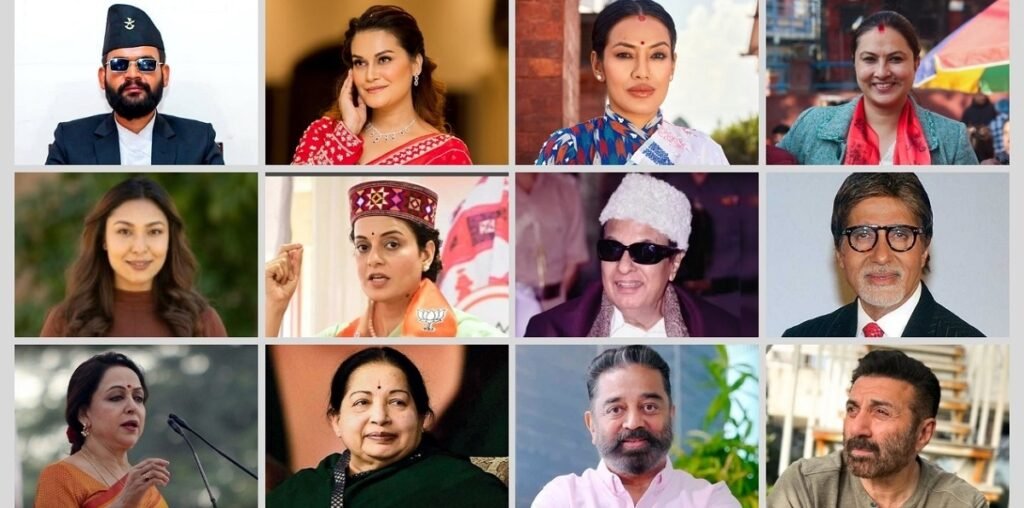
In recent times, the intersection of celebrity culture and politics has become a focal point of discussion in both India and Nepal. In India, despite the popularity of artists like Kamal Haasan, their transition to political roles does not guarantee electoral success, as illustrated by Haasan’s Makkal Needhi Maiam party failing to win seats in its debut election. The trend includes not only actors but also athletes and social media influencers who enhance electoral campaigns, leveraging their public appeal for political gain. However, their effectiveness can be hampered by low parliamentary attendance and participation rates, with a 2024 IndiaSpend survey revealing that celebrity Members of Parliament (MPs) registered only 68% attendance and 20% debate engagement compared to national averages of 79% and 56%, respectively.
Conversely, in Nepal, the relationship between celebrities and politics, while not identical to India’s, is similarly entrenched. Notable figures like Rekha Thapa and Karishma Manandhar are emblematic of artists whose political involvement has often attracted criticism for opportunism. The recent House of Representatives election showcased a significant celebrity presence, with various actors, models, and influencers emerging as candidates. Figures such as Balendra Shah, who defeated a former prime minister, have quickly risen to political prominence, demonstrating the potential for celebrity influence in shaping political landscapes. However, like their Indian counterparts, the long-term impact of such celebrity engagement remains debatable, as many enter politics later in their careers or amidst diminished fame, often relying more on their star status than ideological commitment.