Gen Z Rebellion and Nepal’s Long Road Ahead
Agency: “Who could have thought that the storm blows harder the farther it leaves Paradise behind?”
I have quoted this statement, which is mentioned in the preface (second edition) of the book Imagined Communities written by Benedict Anderson after observing the Indochina (Cambodia-Vietnam) war and its consequences in 1978–79, many times in the past, and I am doing so again this time. This beautiful figurative statement signals the possibilities and fears that follow sudden-seeming change. This should not be taken to mean that what was there before was necessarily right.
After the youth rebellion of September 8 and 9, Nepal is now like an airplane that has entered a thick cloud. The uncertainty and apprehension before us are whether that plane will pierce the cloud and travel towards the light, or whether it will drift in the darkness within the cloud for a long time. There is also the fear that if the government fails to find the right direction, the situation might spiral out of control and the airplane might crash into a mountain.
There are some objective bases for the estimation of a potential accident, which may sound pessimistic or negative; they are not subjective matters. We wish that this does not happen, and that the country finds a bright path. Collective effort is necessary for that. But it is equally true that in the past we lacked a critical consciousness. We indulged in artificial hope and carelessness. That aspect is also responsible for the situation that led to the youth rebellion of September 8 and 9.
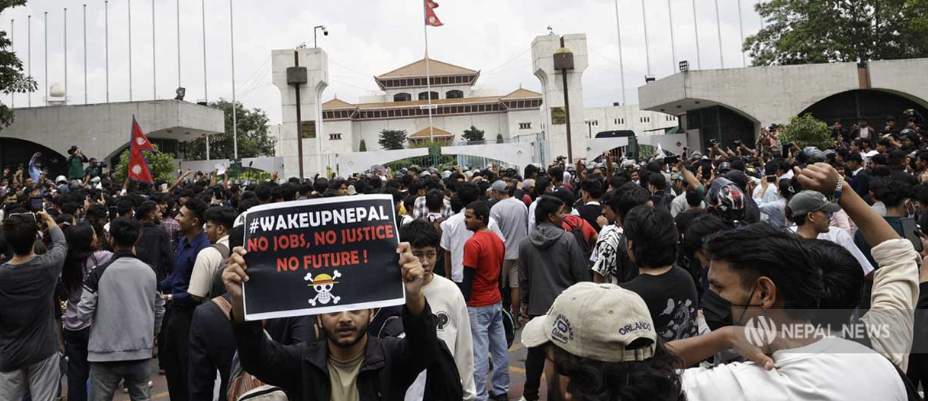
The demands articulated by the Gen Z, which makes up about 30 percent of the population, were indeed the concerns of the majority of Nepalis. The flag of rebellion they raised was representative. This rebellion has provided an unprecedented opportunity for the democratization of Nepali politics. But opportunity does not automatically turn into results.
Optimism without vigilance and skepticism often becomes the cause of extreme despair. Unnatural optimism towards a government formed after a rebellion for a specific purpose in a particular situation can become a reason for disappointment in the near future.
Looking at it irrespective of the outcome, this predominantly city-centric Autumn Rebellion, known as the Gen Z movement, is an unprecedented example of political awakening in the new generation. Following the tragedy of a natural disaster, the Nepali society, which was planning celebrations right before the autumnal festivals like Dashain and Tihar, was badly startled by the events of September 8 and 9. Six weeks have passed since the movement.
A multidimensional analysis of this rebellion, which successfully created a liberal and convention-free political imagination, is necessary. More layers of this will unfold and further analysis will continue in the days to come. Whether the movement is fruitful or not will depend on the working style and results of the government formed in the situation created by the movement.
Examples of youth leadership
As I was preparing the draft of this article, the media were publishing and broadcasting the news that Nepal had qualified for the Cricket World Cup. Social media users were thanking and congratulating the Nepali Cricket Team and the players for raising the country’s prestige with such a leap. The majority of the players in the Nepali team belong to the Gen Z age group. The average age of the players in the Nepali team preparing for the World Cup is 24 years. But while celebrating the team’s achievement, no one was asking which generation they belonged to.
Through sports, the youth have repeatedly provided opportunities for happiness to Nepalis in the past as well. That is, Nepali youth are capable of turning opportunities into results despite many limitations. Citizens seek similar results in all sectors. They are also looking for similar result-oriented performance from the government and politicians.
In the context of political change, too, past movements, revolutions, and rebellions were successful or unsuccessful based on the participation and leadership of the new generation.